Best Haircuts for Men With Thinning Hair That Look Great
Let's get one thing out of the way.
The best haircut for thinning hair usually isn't the one trying hardest to hide it. Sounds backwards. Happens all the time.
Most articles about the best haircuts for men with thinning hair start with coverage.
We wouldn't. Here's why.
The better move is finding a haircut that works with your hair instead of fighting it. Because if you've been trying to outsmart your hair for the last two years... well... how's that going?
Because a style that helps a thinning crown might do very little for a receding hairline. And a haircut that looks great on someone else might be working against your hair density, growth pattern, or daily routine.
At The Roost Barber Co., we've seen plenty of guys walk in convinced they need more length. Most of the time, they need better structure, more texture, or a different approach altogether.
Once the haircut matches the hair, everything gets easier.
Before You Pick a Haircut
Your thinning pattern matters most
More length isn't always better
Texture usually beats coverage
The right cut reduces scalp visibility
Some popular styles work against thinning hair
A good consultation changes everything
Before you decide on a crop, fade, taper, or buzz cut, it's worth figuring out what your hair is actually doing. That's the difference between choosing a haircut that looks good for a day and one that works for weeks.
What Type of Thinning Hair Are You Working With?
Before we talk haircuts, let's figure out what your hair is actually doing. Because a haircut that works great for a thinning crown can be completely wrong for a receding hairline.
We see this all the time.
Not all thinning hair behaves the same way, which is why two men can get the same haircut and walk away with completely different results.
Before looking at specific styles, figure out where you're losing density. Once you know that, choosing the right haircut becomes way easier.
Thinning Crown
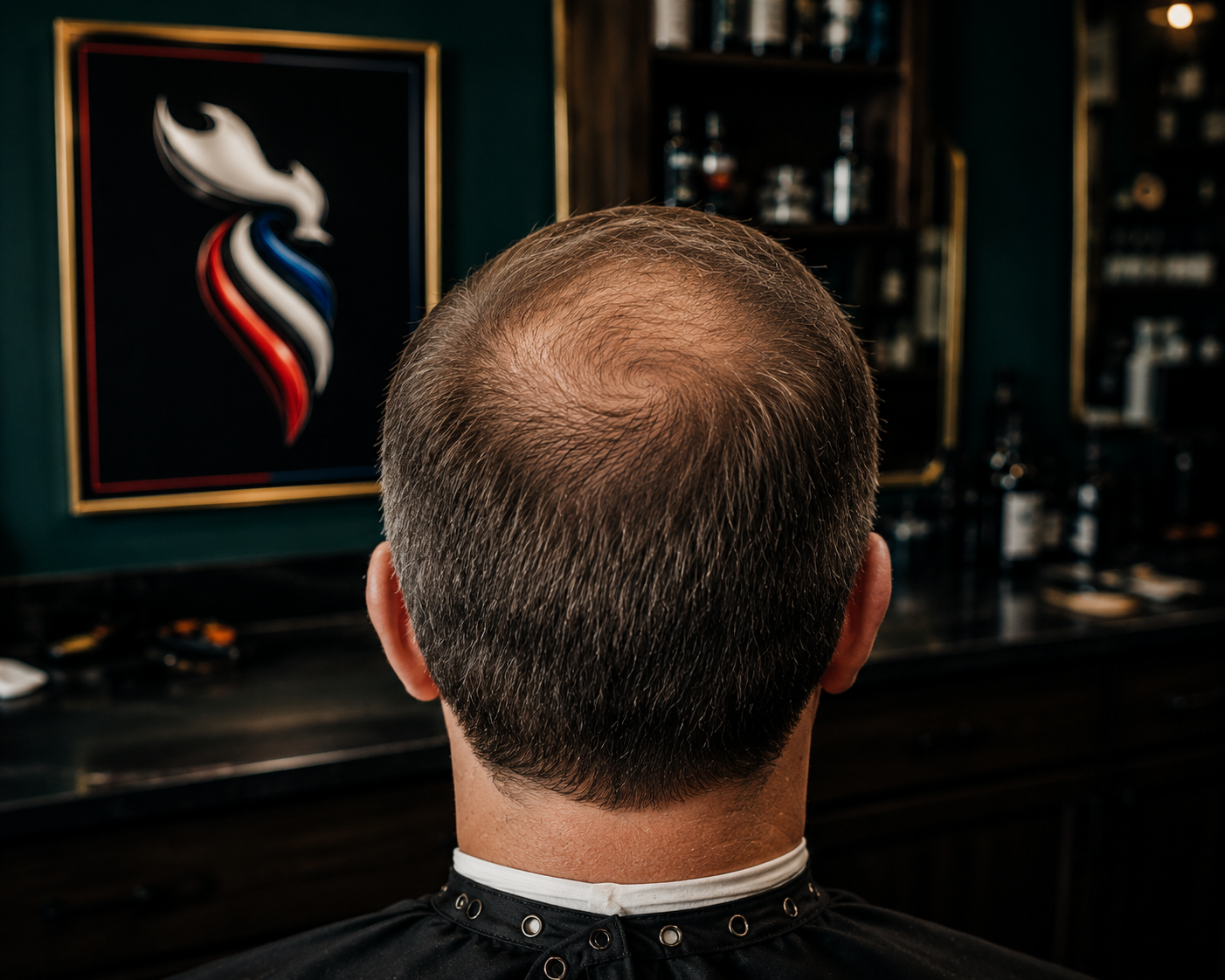
If your crown is thinning, you'll usually notice it near the back of your head. Sometimes a friend points it out. Sometimes it's a photo. Sometimes it's the overhead lighting that suddenly makes you look twice.
Most guys make the same move. They start growing it out. Fair question. More hair should mean more coverage. In theory, anyway.
Here's where things go sideways.
Once that extra length starts separating, the crown often becomes easier to see than before.
Makes sense in theory. In practice, longer hair often separates around the crown and exposes more scalp than you started with.
That's why textured styles tend to work so well. A textured crop, crew cut, or Ivy League creates movement and reduces contrast, making the crown less noticeable without looking like you're trying to hide it.
Receding Hairline
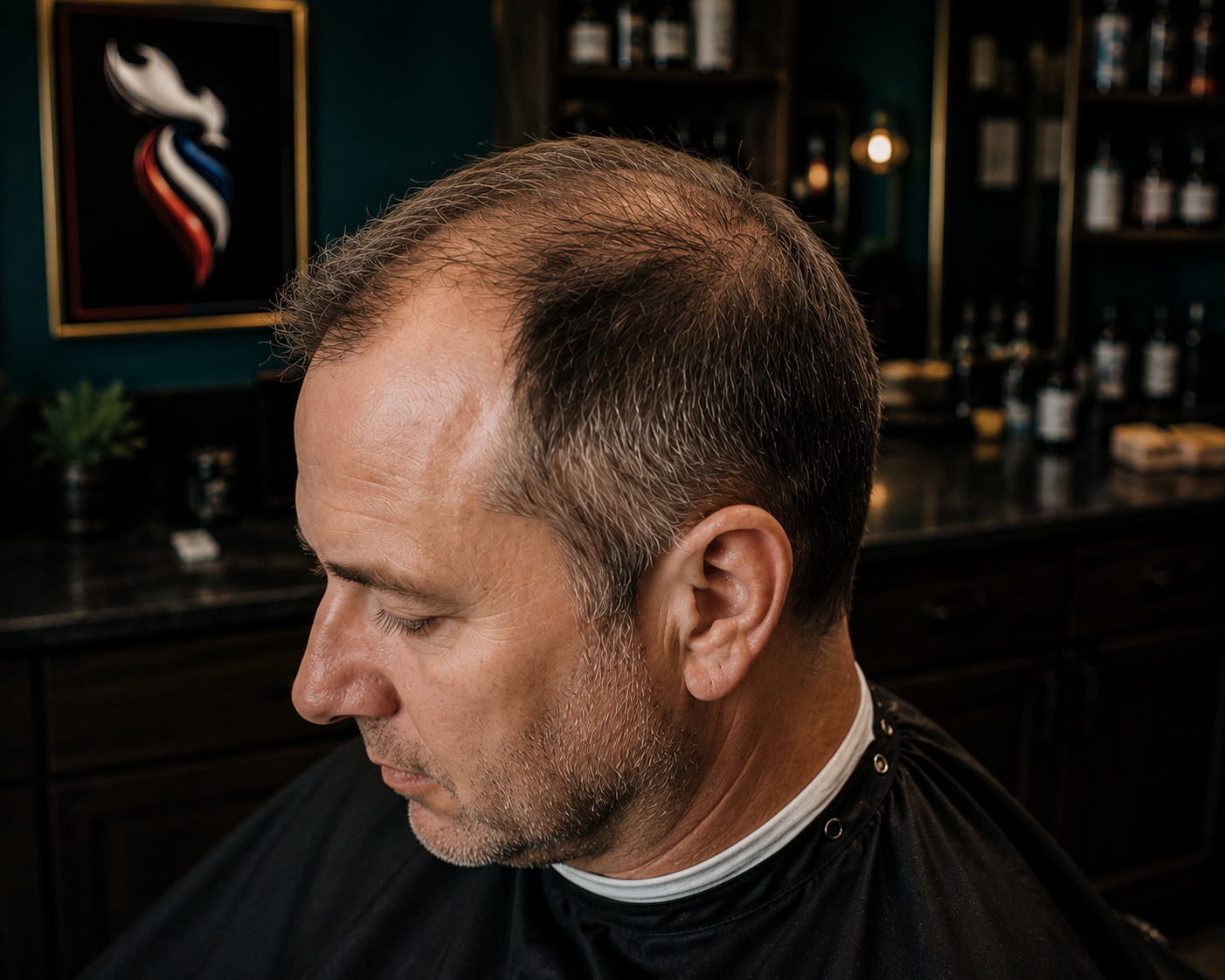
A receding hairline usually starts around the temples, although not everyone notices it right away. For some men, it's gradual. For others, it becomes obvious the moment they compare a current photo to one from a few years ago.
First thing?
A receding hairline doesn't automatically mean it's buzz-cut season. A lot of guys assume they're down to one option the second the temples start moving back.
Not true.
Here's where guys get themselves into trouble.
They start fighting the hairline. More length. More product. More styling.
Usually? That just draws more attention to it. The better move is choosing a haircut that works with your hairline instead of trying to outsmart it.
Styles like the French Crop, Caesar Cut, and Textured Crop soften the transition around the temples and keep the focus on the overall haircut.
Diffuse Thinning
Diffuse thinning is sneaky. One day you realize your hair just isn't doing what it used to. Most guys don't notice a specific thinning spot.
Instead, the hair just stops behaving the way it used to. You get less lift, less volume, and a little more scalp showing when the light hits it.
Here's where guys get frustrated.
They grow their hair longer because it feels like the obvious answer. Fair.
Most guys try that first. Sometimes it helps. Most of the time, it just creates more separation and more scalp visibility.
That's why controlled length tends to work better. The goal is creating shape and structure without asking the hair to do more than it can.
Overall Loss of Density
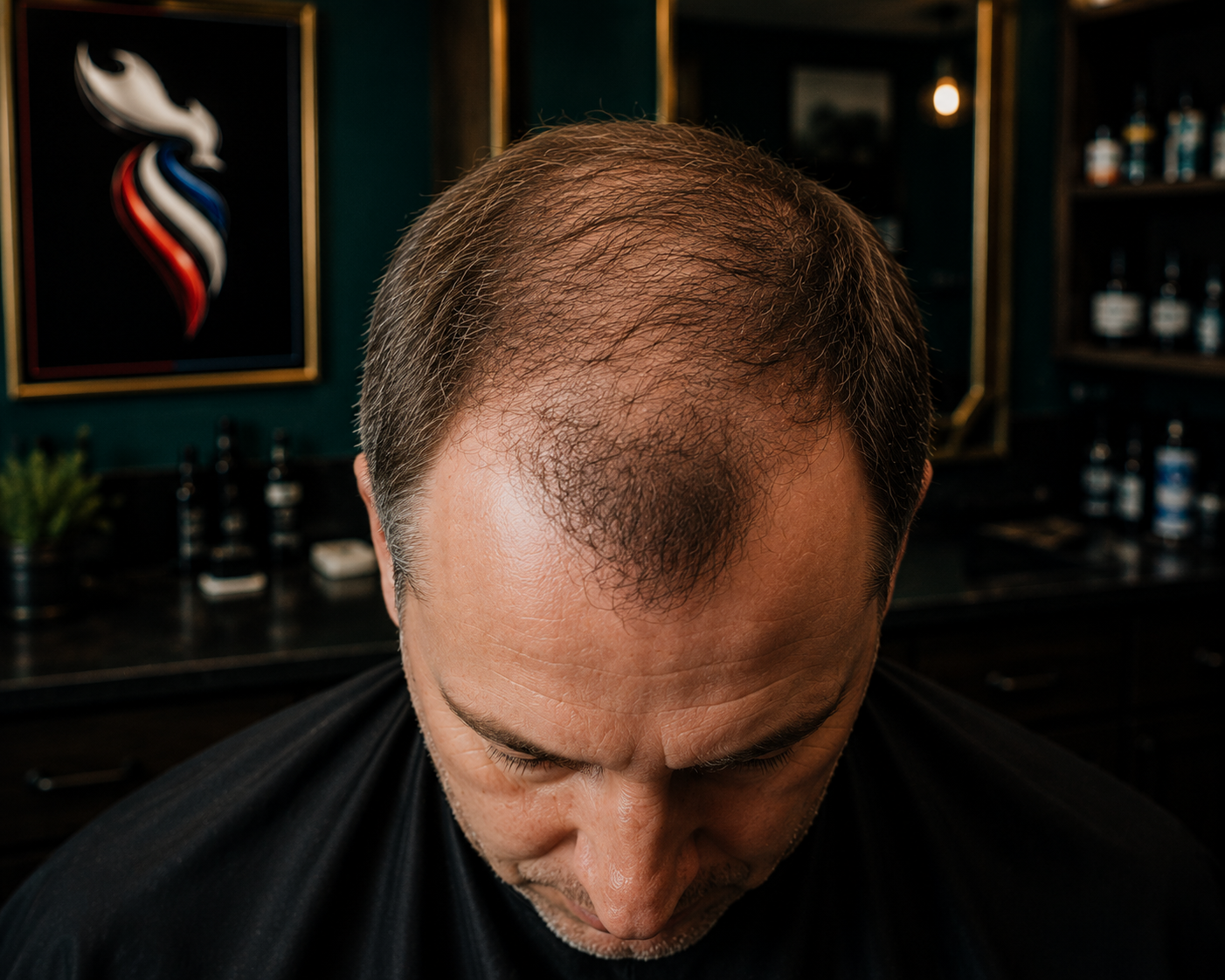
Sometimes there isn't a single problem area. Your hair still covers the scalp, but it doesn't have the same fullness it once did.
This is where a lot of men focus on coverage when they should be focusing on shape. That's an important distinction. Most guys focus on coverage. Fair. That's what everybody talks about.
Usually? Texture does more of the heavy lifting.
The goal isn't creating the illusion of thick hair. It's creating a haircut that works with the density you have today.
The good news? You still have options.
The right haircut won't give you more hair. It can absolutely help you look sharper, feel more confident, and spend less time fighting with it every morning.
Which Haircut Is Best for Your Thinning Pattern?
Want the short answer?
The best haircut is the one working with your thinning pattern, not against it. That's why generic haircut lists usually aren't much help. They give you thirty haircut ideas and zero direction.
Before you choose a style, ask yourself one question.
What problem are you actually trying to solve?
Less scalp showing?
Easier mornings?
Something that still looks sharp at week four?
Start there.
Those answers matter just as much as the haircut itself.
Quick Decision Guide
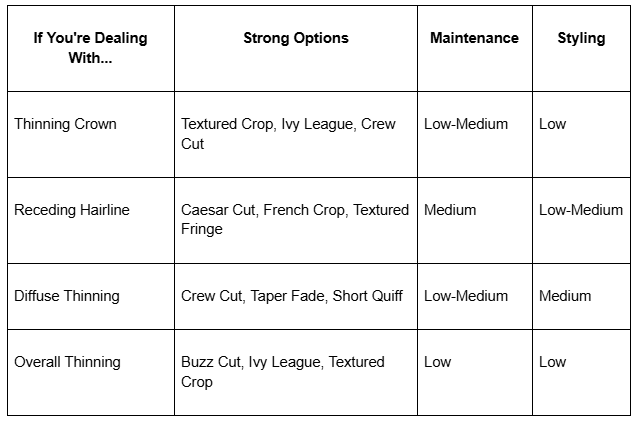
Use this as a starting point, not a rulebook. The best haircut still depends on your hair type, growth pattern, and how much effort you're willing to put into styling.
Best Haircuts for a Thinning Crown
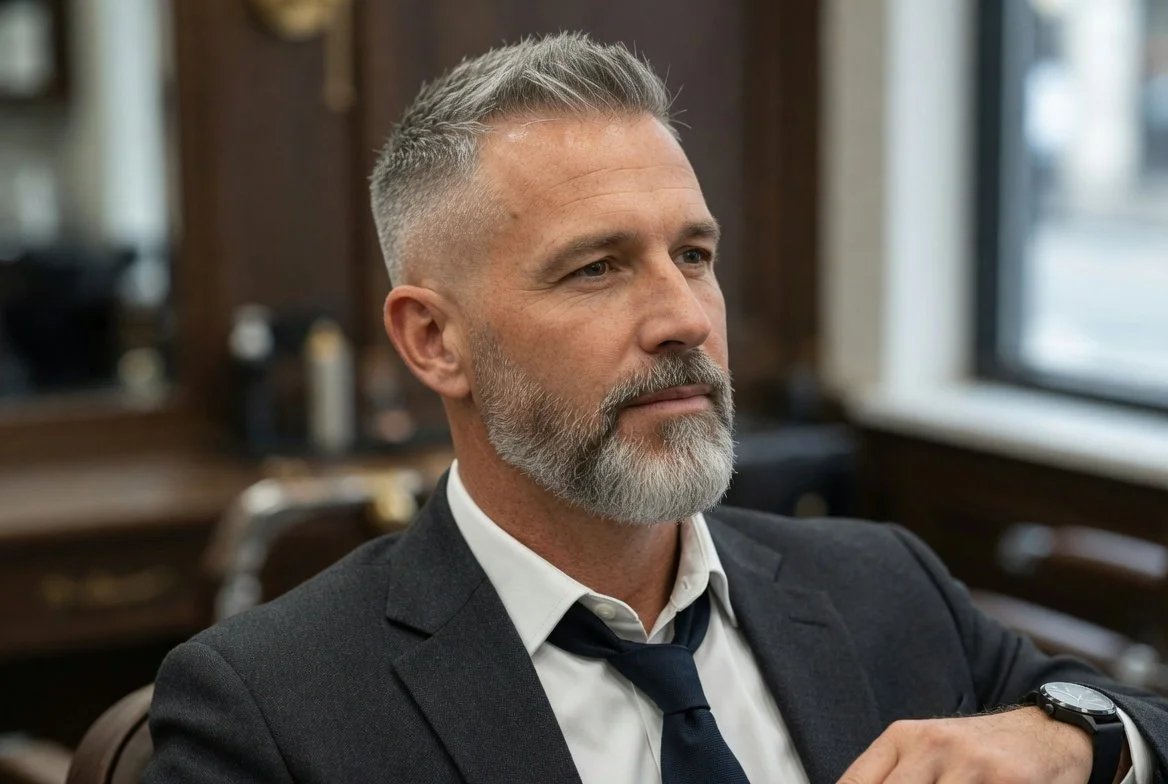
If the crown is the area bothering you most, focus on reducing contrast rather than creating coverage.
A lot of guys grow their hair longer hoping it will hide the thinning spot. Sometimes that works for a while. More often, the added length separates and makes the crown easier to see.
That's why shorter textured styles tend to perform better. They create movement, add structure, and help the crown blend more naturally into the rest of the haircut.
If the crown is your biggest concern, we'd probably start with a Textured Crop.
After that?
Ivy League.
Crew Cut.
Short Taper.
Different hair. Different situation. But those are usually where the conversation starts.
Best Haircuts for a Receding Hairline
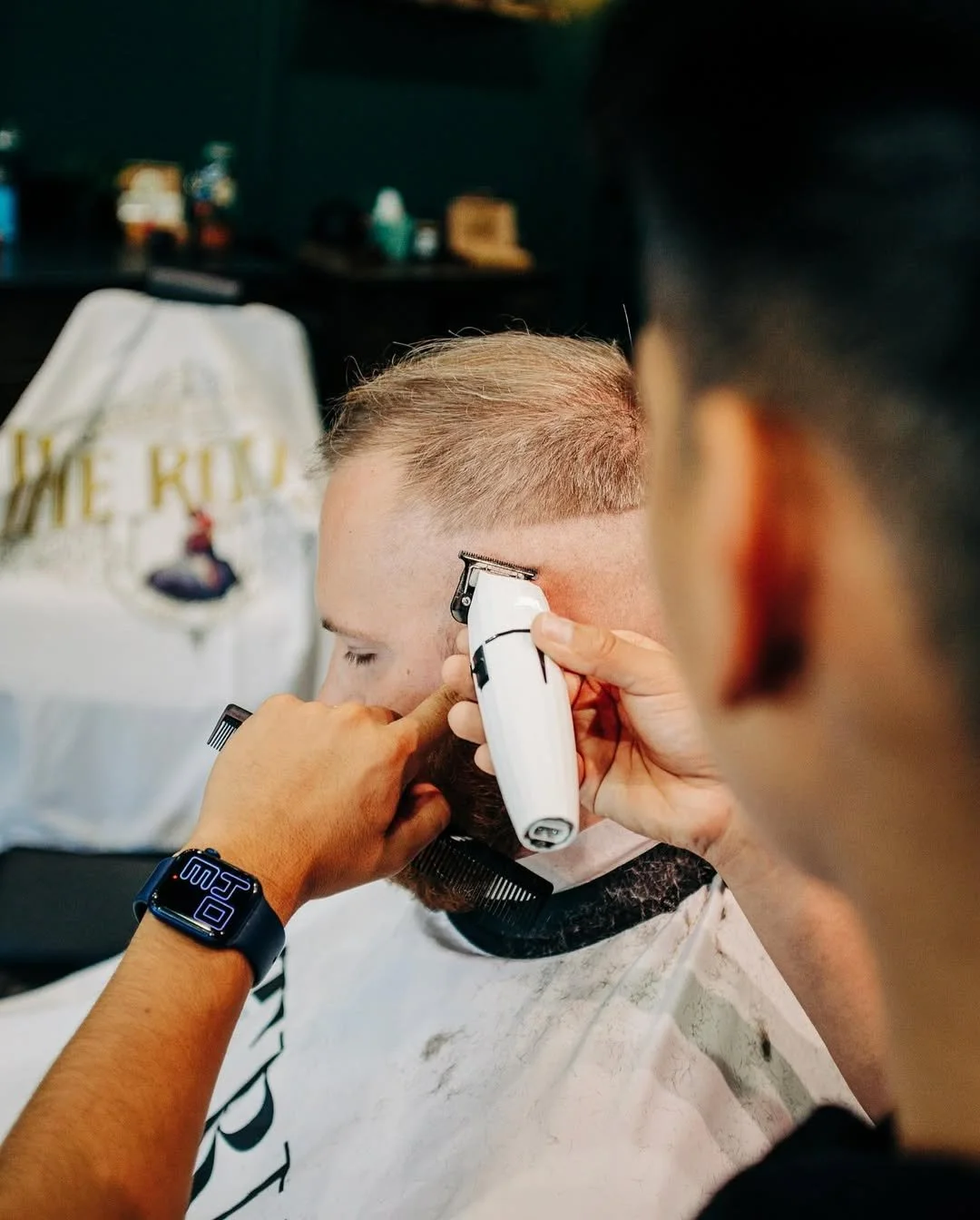
We've seen this one a lot. Guys become so focused on hiding the hairline that the haircut starts drawing even more attention to it.
The better approach is choosing a style that works with your hairline instead of fighting it. When the haircut feels natural, people notice the style, not the recession.
That's why barbers often recommend styles like the Caesar Cut, French Crop, and Textured Crop. They soften the transition around the temples and create a more balanced overall look.
Best Haircuts for Diffuse Thinning
Here's where a lot of guys get stuck.
They want enough length to create shape. Fair. They just don't want so much length that the hair starts working against them.
That's a common mistake. Guys assume more hair automatically means more volume. In reality, heavier hair often sits flatter and exposes more scalp.
Styles like the Crew Cut, Ivy League, Short Quiff, and Taper Fade usually strike the right balance. They create structure without asking your hair to do more than it realistically can.
Best Haircuts for Overall Thinning
When density is lower across the entire head, simplicity tends to win.
This isn't the time to force complicated styles or spend twenty minutes trying to create coverage every morning. It's the time to choose a haircut that works with what you have.
The Buzz Cut, Textured Crop, Ivy League, and Short Crew Cut are all strong options. They create a cleaner silhouette and often make thinning less noticeable overall.
The goal isn't creating the illusion of thick hair. It's creating a haircut that looks intentional, fits your routine, and gives you confidence when you leave the house.
Still not sure which direction to go? That's exactly why a good consultation matters.
Five minutes in the chair can save you months of trying to make the wrong haircut work. Booking a men's haircut service with an experienced barber is often the fastest way to figure out what works for your hair.
What Haircuts Do Barbers Recommend Most Often for Thinning Hair?
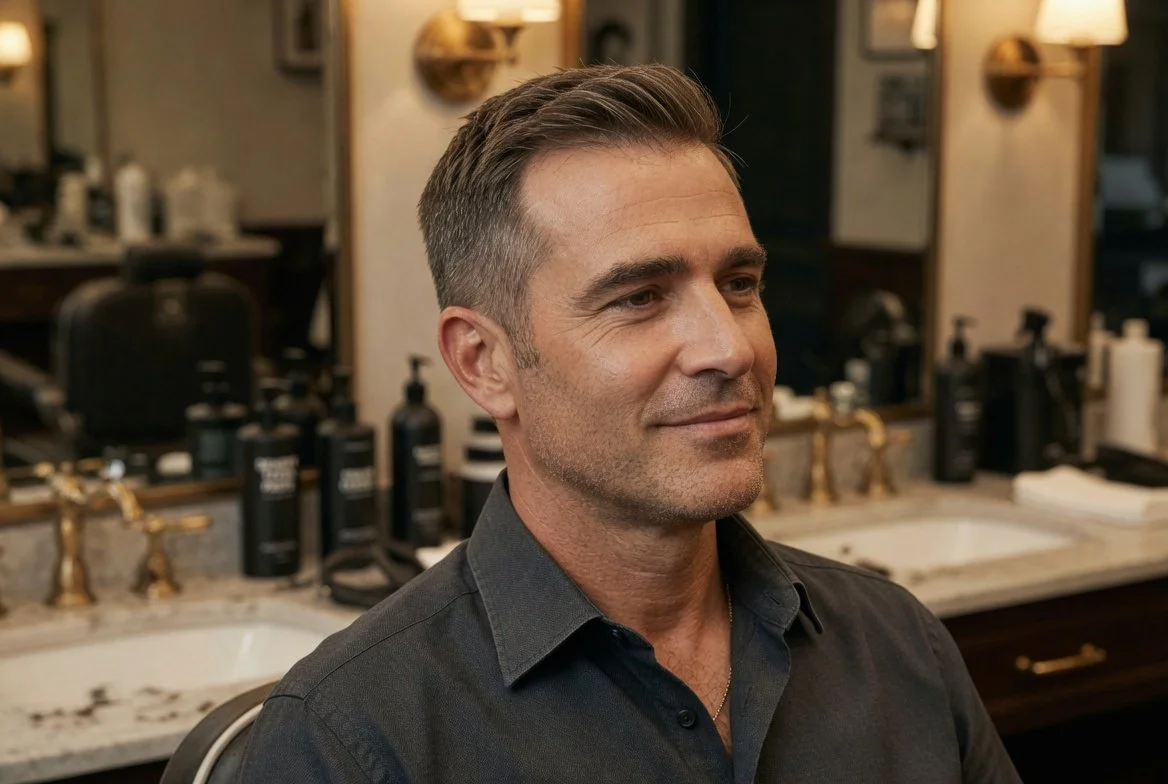
A lot of articles throw 25 or 30 haircut ideas at you and hope something sticks. Let's simplify things.
These are the styles we recommend most often because they consistently work in real life. Not just in photos. Not just on models. On actual men dealing with thinning hair every day.
Textured Crop
If we had to start somewhere with most guys, it'd probably be the Textured Crop.
Why?
Because texture does a lot of the work for you. It breaks up scalp visibility, adds movement, and doesn't ask for twenty minutes in front of the mirror every morning. That's a solid trade.
Barber verdict: One of the safest and most versatile choices for thinning hair.
Crew Cut
The Crew Cut has been around forever because it solves a lot of problems with very little effort.
By keeping the hair shorter, it reduces contrast between thicker and thinner areas. The result is a cleaner, more consistent look that's easy to maintain.
Best for:
Diffuse thinning
Overall density loss
Maintenance: Low
Styling: Very easy
Barber verdict: Professional, reliable, and hard to mess up.
French Crop
The French Crop works especially well when the temples are starting to move back.
Instead of trying to disguise recession, it softens the hairline and creates a more balanced shape. That's usually a better long-term solution than forcing extra coverage.
Best for:
Receding hairlines
Maintenance: Medium
Styling: Easy
Barber verdict: A smart choice for men focused on the front hairline.
Ivy League
Some men want a haircut that still feels polished in a boardroom or client meeting. That's where the Ivy League shines.
It keeps enough length on top to create shape while maintaining a clean, professional appearance. You get structure without looking overstyled.
Best for:
Moderate thinning
Office professionals
Business owners
Maintenance: Medium
Styling: Low
Barber verdict: One of the strongest professional haircuts for thinning hair.
Caesar Cut
The Caesar Cut doesn't get as much attention as it deserves.
The forward styling helps soften the hairline naturally, making it particularly effective for men dealing with recession around the temples.
Best for:
Receding temples
Front thinning
Maintenance: Low
Styling: Easy
Barber verdict: Underrated, practical, and surprisingly effective.
Buzz Cut
Let's be honest.
Nobody lands on this article hoping the answer is a Buzz Cut.
Fair. But for some guys, it's the point where everything gets easier. No more chasing coverage. No more trying to make the same haircut work for another six months.
Just a clean, confident look that fits where your hair is right now.
The Buzz Cut removes the contrast between thick and thin areas. Instead of chasing coverage, it creates consistency across the entire head.
For many men, that's the point where things become easier.
Best for:
Advanced thinning
Significant recession
Low-maintenance routines
Maintenance: Very low
Styling: None
Barber verdict: Clean, confident, and often more flattering than holding onto extra length.
Taper Fade
A lot of guys automatically ask for a skin fade. The problem is that thinning hair changes the conversation.
A Taper Fade keeps more weight around the sides and back, which often creates better balance. That balance can make the hair on top appear fuller without requiring extra styling.
Best for:
Diffuse thinning
Professional styles
Easier grow-outs
Maintenance: Medium
Styling: Low
Barber verdict: For many men with thinning hair, it's a smarter long-term choice than a high skin fade.
Which Haircuts Usually Make Thinning Hair Look Worse?
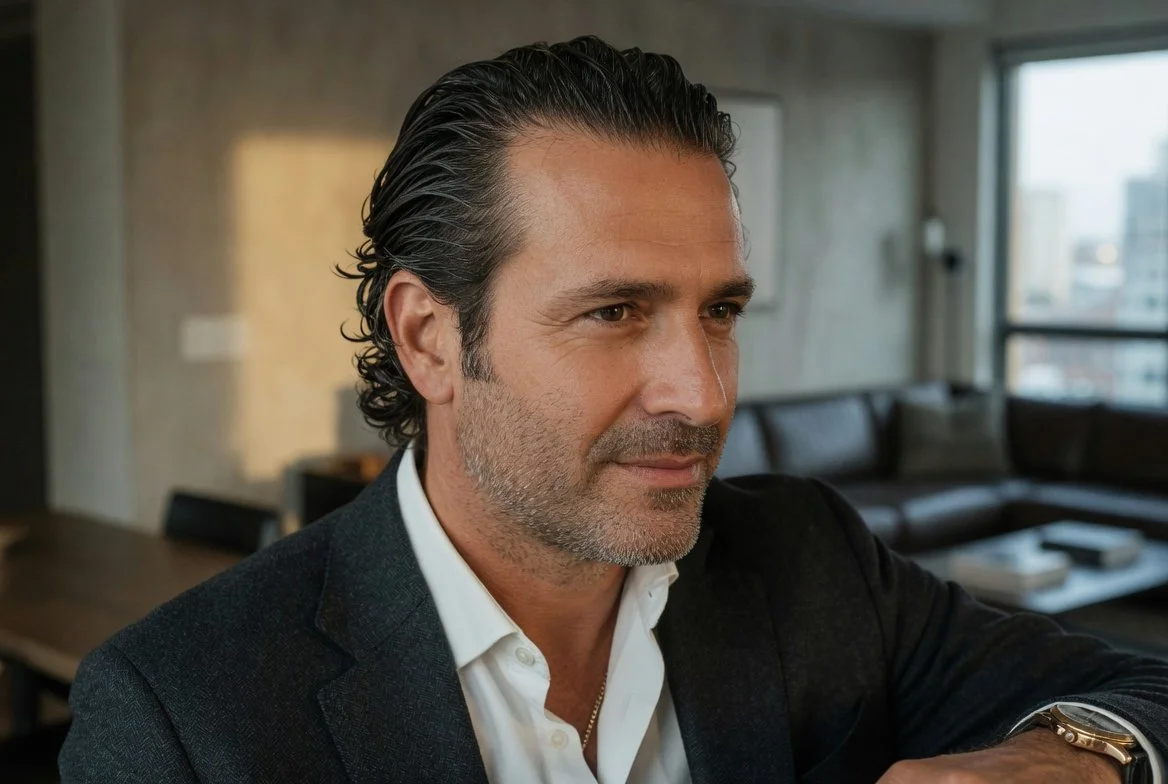
Most articles focus on what to do. That's helpful, but it's only half the conversation.
It's just as important to know which styles tend to work against thinning hair. A haircut can look great in a photo and still be the wrong choice for your hair density, growth pattern, or daily routine.
Here's what actually matters: it isn't avoiding these styles at all costs. It's understanding why they become harder to pull off as hair starts thinning.
Long Slicked-Back Styles
A lot of men move toward longer hair when they notice thinning. The logic makes sense. More hair should create more coverage.
The problem?
Slicked-back styles need density to really work. Once density starts disappearing, the haircut starts asking more from your hair than your hair wants to give.
Things become even more noticeable when shine enters the equation. A glossy finish reflects light and makes sparse areas stand out more than they otherwise would.
That's why many men are surprised after a haircut. They walk in thinking they need more length and leave realizing they needed a different strategy.
Heavy Comb-Overs
Let's be clear. A modern side-swept style can work extremely well. A heavy comb-over is a different conversation.
The issue isn't how it looks when you leave the house. The issue is how it looks six hours later.
Humidity, wind, and normal movement tend to separate longer sections of hair. When that happens, the scalp becomes more visible and the style starts working against you.
That's one reason textured styles often outperform styles built around coverage alone.
High-Shine Hairstyles
Most men focus on the haircut and forget about the product. That's a mistake because styling products can completely change how dense your hair appears.
Here's a simple rule: more shine usually means more scalp visibility.
Heavy pomades, glossy gels, and wet-look products reflect light. That reflection makes thinning areas easier to see, especially under bright lighting.
That's why most barbers recommend matte products for thinning hair. They create texture, reduce reflection, and help the hair appear fuller.
Long Flat Hair
Length isn't always the problem. Flatness usually is.
When hair sits directly against the scalp, every gap becomes easier to notice. The result is often less volume, less shape, and more visible thinning.
This is one of the biggest reasons clients are surprised after a haircut. They come in asking for more coverage and leave with less length.
What they actually needed was texture, movement, and structure.
A little shape can make a much bigger difference than a few extra inches of hair.
Is a Fade or Taper Better for Thinning Hair?
This question comes up all the time.
Most guys assume the shorter option automatically wins. Sometimes it does. Sometimes it removes the very balance helping your hair look fuller.
That's why the answer depends on what your hair is actually doing.
If you're still deciding between the two, our guide on the difference between a fade and taper can help you understand how each option affects the overall look and grow-out of your haircut.
Many guys assume the tighter haircut is automatically the better haircut. Sometimes that's true. Sometimes it removes the very balance that's helping your hair look fuller.
Could a high skin fade work? Sure.
For everybody? Nah.
When a Fade Works
A fade can absolutely work with thinning hair when there's enough density on top to support the contrast.
The shorter sides help draw attention upward and create a cleaner overall shape. When the balance is right, a fade can make the haircut look sharper and more intentional.
Styles that commonly pair well with fades include:
Textured Crop
French Crop
Crew Cut
Short Quiff
The challenge comes when the fade becomes too aggressive. A high skin fade can sometimes make thinning on top appear more noticeable because the contrast becomes too extreme.
When a Taper Works Better
This is where many men are surprised.
A taper leaves more weight around the sides and back, which often creates better balance throughout the haircut. That balance can help thinning hair appear fuller without requiring additional styling.
It's particularly effective for men dealing with:
Thinning crowns
Diffuse thinning
Professional grooming needs
Another advantage is versatility. A taper works in nearly every setting, from the office to a weekend event, without feeling overly trendy.
Which One Grows Out More Naturally?
If your schedule is busy, this matters.
A taper usually grows out more naturally because the transition between lengths is softer. The haircut keeps its shape longer and doesn't require frequent touch-ups to stay clean.
A fade often looks its best right after the appointment. A taper tends to look good for longer.
That's why many professionals choose a taper. They're thinking about week three, not just day one.
How Can You Make Thinning Hair Look Thicker Every Day?
The haircut matters, but your daily routine plays a huge role in how your hair looks.
The good news is that most improvements don't require expensive products or complicated techniques. A few small changes can make thinning hair appear noticeably fuller.
Does Blow-Drying Actually Help?
Small changes can make a bigger difference than most guys realize.
The haircut matters, but healthy hair and scalp habits matter too. And if you're looking for a complete grooming experience, The Works combines a haircut with additional services designed to help you leave feeling sharp.
Usually, you need a little lift and the right product. A lot of guys let their hair air dry because it's quick and easy. Fair.
The problem is that air drying often leaves thinning hair sitting flat against the scalp. Flat hair shows more scalp. Hair with lift creates the appearance of density.
A few minutes of blow-drying at the roots can completely change how a haircut looks. The extra volume adds movement, shape, and structure.
A simple routine is usually enough:
Medium heat
Lift at the roots
Dry upward
Finish with cool air
You don't need perfection. You just need a little lift.
Which Products Add Volume Without Weighing Hair Down?
This is another area where good intentions backfire.
A lot of guys start adding more product when their hair starts thinning. Makes sense. More control should help.
Usually? They end up with flatter hair and more visible scalp.
For thinning hair, lightweight products almost always perform better.
Strong options include:
Texture powder
Sea salt spray
Matte paste
Volumizing spray
Lightweight clay
These products create separation and movement without making the hair feel heavy.
Products that often cause problems include:
Heavy pomades
Thick waxes
Greasy creams
High-shine gels
In most cases, less weight means more volume.
What Styling Mistakes Should You Avoid?
The biggest mistakes usually come from trying too hard.
When men notice thinning, they often add more product, grow more length, or spend more time trying to create coverage.
Unfortunately, those strategies can have the opposite effect.
Common mistakes include:
Using too much product
Growing hair excessively long
Choosing shiny finishes
Skipping blow-drying
Fighting natural growth patterns
One of the most common examples we see at The Roost Barber Co. is a client doubling his product use as his hair gets thinner.
It feels like the logical move.
By midday, though, the hair is flatter, heavier, and showing more scalp than before.
Sometimes the best solution is simplifying the routine, not adding more to it.
What Should You Tell Your Barber if Your Hair Is Thinning?
A lot of bad haircut experiences aren't actually bad haircuts. They're communication problems.
You know something changed. Your barber knows something changed. The challenge is figuring out exactly what your hair is doing and what you want the haircut to accomplish.
The good news is that you don't need technical terms. You just need to be specific about what you're seeing.
How to Explain Your Concerns
Saying "my hair is thinning" helps.
But if you were sitting in my chair, I'd probably ask a few follow-up questions.
A better approach is explaining exactly what's bothering you. Maybe you're seeing more scalp at the crown. Maybe your temples are moving back. Maybe your hair feels flatter than it used to.
Those details help your barber identify the real issue and recommend a haircut that fits your situation.
This happens all the time at The Roost Barber Co. A client comes in asking for a different haircut, but what he's really looking for is a solution to a thinning problem. Once that becomes clear, the conversation gets much easier.
What Photos to Bring
Reference photos can be incredibly helpful, but only if they're realistic.
Look for examples that have a similar hairline, density, and texture to your own. The closer the match, the more useful the photo becomes.
This is where a lot of guys get frustrated. They bring in a photo of someone with completely different hair and expect the same result.
The goal isn't copying someone else's haircut. The goal is showing your barber the direction you want to go.
Questions Worth Asking
A good consultation should leave you with clarity, not confusion.
You don't need a long list of questions. Just focus on the ones that help you understand what will work best for your hair.
Consider asking:
What suits my thinning pattern?
Is this length helping?
Fade or taper?
How much styling?
How often should I return?
The answers will tell you far more than a hairstyle photo ever could.
A strong consultation often prevents the mistakes that lead to haircut regret later.
When Is It Time to Go Shorter?
This is one of the toughest decisions for many men.
When hair starts thinning, the natural instinct is to hold onto length. It feels safer because more hair should mean more coverage.
Sometimes that's true.
Other times, the extra length becomes the reason thinning looks more noticeable.
So how do you know when the extra length stops helping?
Signs Longer Hair Is Working Against You
Longer hair isn't automatically a bad choice. In some cases, it works well.
The issue is when the haircut starts demanding more effort while delivering worse results.
You may want to consider going shorter if:
Scalp shows throughout the day
Hair falls flat quickly
Styling takes too long
Wind ruins the look
These are often signs that the haircut is carrying too much weight.
When that happens, the hair loses shape and becomes harder to control. The extra length stops helping and starts working against you.
Why Many Men Choose a Buzz Cut
Let's clear up a common misconception.
Choosing a buzz cut isn't giving up.
For many men, it's the moment they stop fighting their hair and start working with it.
A buzz cut removes the pressure to create coverage. Instead of worrying about hiding thinning areas, you create a clean and consistent appearance across the entire head.
That's why so many men describe it as a relief.
The benefits are straightforward:
Minimal upkeep
No daily styling
Clean appearance
Consistent shape
Not every man needs a buzz cut. But it's often a stronger option than trying to force a style that no longer fits your hair.
Confidence vs Coverage
At some point, the conversation changes.
Most men start by asking how to hide thinning hair. That's a normal reaction.
Over time, though, a better question usually emerges: "How do I look my best?"
That's where confidence starts winning over coverage.
A sharp crew cut, textured crop, taper fade, or buzz cut often looks stronger than a complicated style designed to disguise every thinning area.
The goal isn't pretending your hair hasn't changed. The goal is choosing a haircut that still looks intentional, polished, and appropriate for your lifestyle.
That's what people notice.
Not how much hair you have, but how well the haircut suits you.
Before you leave this page, remember one thing:
Work with your hair, not against it. That's usually where the best results begin.
Frequently Asked Questions For Best Men’s Haircuts
What is the best haircut for men with thinning hair?
Depends on what's thinning. If it's the crown, we'd probably point you toward something textured. If it's the hairline, the conversation changes. That's why there's no one-size-fits-all answer.
Can a fade make thinning hair look thicker?
Yes, a fade can make thinning hair look thicker when there's enough density on top to support the contrast. The key is choosing the right fade. In many cases, a low fade or taper fade creates a more balanced result than a high skin fade.
Should thinning hair stay short?
Usually, yes. Shorter styles often create more structure and make thinning less noticeable. That doesn't mean everyone needs a buzz cut, but shorter textured cuts tend to be easier to style and maintain.
What haircut works best for a thinning crown?
Haircuts that add texture and reduce contrast usually perform best. Textured crops, crew cuts, Ivy League cuts, and short tapers are all strong choices because they help the crown blend naturally into the rest of the haircut.
How often should men with thinning hair get a haircut?
Most men benefit from a haircut every three to five weeks. If you're maintaining a shorter style, a haircut membership can make regular visits easier and more affordable.
Does growing hair longer hide thinning hair?
Longer hair doesn't automatically create more coverage. In many cases, extra length separates and falls flat, making thinning easier to see. A shorter haircut with texture often creates a fuller appearance.
Should men with thinning hair avoid fades?
Fades can work very well for thinning hair. The important thing is choosing a fade that complements your density level. For many men, a taper fade creates a better balance than a high skin fade.
Is a buzz cut the only option for thinning hair?
Not at all.
Many men do well with textured crops, crew cuts, Ivy League cuts, Caesar cuts, and taper fades. The right choice depends on your thinning pattern, lifestyle, and personal preferences.
How do barbers make thinning hair look fuller?
Barbers use shape, texture, and balance to create the appearance of fuller hair. The goal isn't creating more hair. It's creating a haircut that makes the most of the hair you already have.
What products work best for thinning hair?
Lightweight products usually work best. Texture powder, sea salt spray, matte paste, lightweight clay, and volumizing sprays create lift and separation without weighing the hair down.
The Best Haircut Is the One That Fits You
If you're still deciding between a crop, crew cut, taper, or buzz cut, don't overthink it.
Bring a couple reference photos.
Tell your barber what you're seeing.
Tell him what's frustrating you.
Tell him what you're tired of fighting every morning.
That's usually where the real conversation starts.
Because the goal isn't finding the haircut with the most coverage. It's finding the haircut that fits your hair, your routine, and the way you want to show up.
Once those things line up, everything gets easier. That's when the haircut starts working for you.
If you're still not sure which direction to go, that's what the conversation is for.
Bring a couple photos.
Tell us what you're seeing.
Tell us what's frustrating you.
We'll help you figure out what works for your hair. No guessing required.