
Growing a beard sounds simple enough. Stop shaving, give it time, and let nature do its thing. Easy, right?
Well, then one cheek fills in, the other seems to be on vacation, and suddenly you're Googling beard oils, supplements, and whether shaving every other day is some kind of secret hack.
Hmmm. We've heard this one before.
Here's the deal: genetics, age, and hormones have a lot to do with how your beard grows. The right grooming routine can make it look and feel better, but it won't magically turn sparse cheeks into a lumberjack's beard. Sorry, fellas.
If you're not sure what to do with the beard you've got, our barbers at The Roost Bend can help you find a shape that works with your natural growth. But first, let's sort out the myths from the facts.
What Actually Affects Beard Growth?
Before we get into the myths, let's get one thing straight. Your beard isn't going to follow someone else's growth pattern just because their routine looks convincing on social media.
Genetics, Age, and Hormones
Genetics plays a big role in your beard's thickness, coverage, and growth pattern. Some guys get the full package across their cheeks. Others have strong growth along the chin and jaw, with a few gaps in the lineup.
Geez, genetics. What can you do?
Age matters, too. According to the Cleveland Clinic, many beards continue developing in thickness and coarseness between ages 18 and 30. So if you're in your twenties and your beard is still figuring itself out, give it some time.
Hormones, particularly androgens, influence facial hair development. But a patchy beard doesn't automatically mean your testosterone is low. Hair follicles respond differently to hormones, and beard density alone isn't a reliable way to judge your hormone levels.
Beard Growth Myths vs. Facts

Beard advice is everywhere. Some of it comes from experience, some from wishful thinking, and some from a guy who swears his cousin's routine changed everything.
Aight, let's separate what sounds good from what actually holds up.
Myth: Shaving Makes Your Beard Grow Thicker
Fact: Shaving doesn't make your beard grow faster or thicker.
A razor cuts hair at the skin's surface. When it grows back, the blunt tip can feel rougher than the naturally tapered end of an uncut hair. That's why fresh stubble can seem thicker.
But shaving doesn't create new follicles or change your hair's growth rate. If shaving worked that way, every guy who shaved daily would have a full beard by now. We'd all be in trouble.
Myth: Beard Oil Creates New Growth
Fact: Beard oil conditions existing hair. It doesn't create new follicles.
A good beard oil can soften coarse facial hair, moisturize the skin underneath, and make your beard more comfortable to wear. Pretty useful when things get dry, itchy, or a little unruly.
Easy there, though. Your beard needs oil, not a swimming pool. Start with a small amount and work it through your beard and into the skin.
Think of beard oil as maintenance, not a miracle growth treatment. It can improve how your beard looks and feels, but it won't reliably fill in sparse cheeks or increase density.
Myth: A Patchy Beard Means Low Testosterone
Fact: Patchy growth is often genetic. It doesn't automatically mean something is wrong with your hormones.
Some men naturally have less coverage on their cheeks or different growth patterns across the face. That's common, and it doesn't necessarily need fixing.
If you're noticing other symptoms or have concerns about your hormone levels, speak with a healthcare professional rather than trying to diagnose yourself in the bathroom mirror. That mirror has enough opinions already.
Myth: Supplements Guarantee a Fuller Beard
Fact: Supplements aren't a guaranteed shortcut to beard growth.
Nutrients like iron, zinc, biotin, and protein support normal hair health. If you're genuinely deficient in something, correcting that deficiency may help address related problems.
But taking extra supplements when you don't need them won't automatically make your beard fuller. More isn't always better, despite what the bottle says.
If you're concerned about your nutrition or experiencing ongoing hair loss, talk with a healthcare professional before loading up on supplements.
What Can Actually Help Your Beard Look and Feel Better?
Aight, here's where you have some control. You may not get to choose where every hair grows, but you can influence how your beard looks, feels, and fits your style.
Maintain a Consistent Beard-Care Routine
Start with the basics. Wash your beard gently with a suitable beard shampoo, moisturize the skin underneath, and keep things clean. That helps manage dryness, flaking, and irritation.
If your facial hair feels coarse, beard oil or balm can help soften it. A beard brush can also help distribute natural oils and keep longer hair looking tidy.
And if you're growing it out, be careful with the trimming. Cleaning up stray hairs is one thing. Taking off half the length every time you get impatient? Well, that's a different story.
For more guidance, check out the American Academy of Dermatology's beard care tips.
Support Your General Health
A balanced diet and adequate sleep support your overall health, including normal hair health. If you're noticing significant hair loss or suspect a nutritional deficiency, get professional advice instead of guessing which supplement to add to your routine.
Healthy habits are worth keeping. Just don't confuse supporting your body's health with guaranteeing faster beard growth. Your follicles didn't sign a contract.
What to Do If Your Beard Is Patchy
So, your cheeks aren't cooperating. Doesn't mean the whole beard has to go.
Give Developing Facial Hair Time
If you're in your teens or twenties, your beard may continue changing as you get older. Letting it grow for a reasonable period can help you see what your natural coverage looks like.
But don't put your life on hold waiting for a full beard. Genetics still have the final say, and there's no guarantee every patch will fill in.
You can find a style that works right now. No need to wait for your beard to reach its final form.
Choose a Style That Works With Your Coverage
Not every beard style needs full coverage across the cheeks. Sometimes going shorter or changing the shape makes a bigger difference than adding more length.
Here are a few starting points:
Sparse cheeks: Short stubble or a style that needs less cheek coverage can create a cleaner, more consistent look.
Fuller chin and jaw: A short boxed beard or goatee can make the most of your stronger growth areas.
Uneven length: A careful trim can bring everything into better balance.
The right style also depends on your face shape, personal preference, and how much maintenance you're willing to put in. These are starting points, not hard rules.
Not sure which beard style works with your growth? That's exactly the kind of thing our barbers can help you figure out during The Works at The Roost Bend. Sometimes a little shaping makes a bigger difference than another six months of waiting for your cheeks to cooperate.
Know When Unusual Hair Loss Needs Medical Attention
If your beard has always grown this way, a grooming adjustment may be all you need. But sudden bald patches, smooth round areas without hair, or noticeable changes in coverage deserve medical attention.
Conditions like alopecia areata can affect facial hair. A dermatologist can assess what's happening and discuss appropriate treatment options.
Your barber can help you shape and maintain your beard. Diagnosing your hormones? Yeah, that's not in our job description. We know our lane.
When Should You Get Your Beard Professionally Shaped?
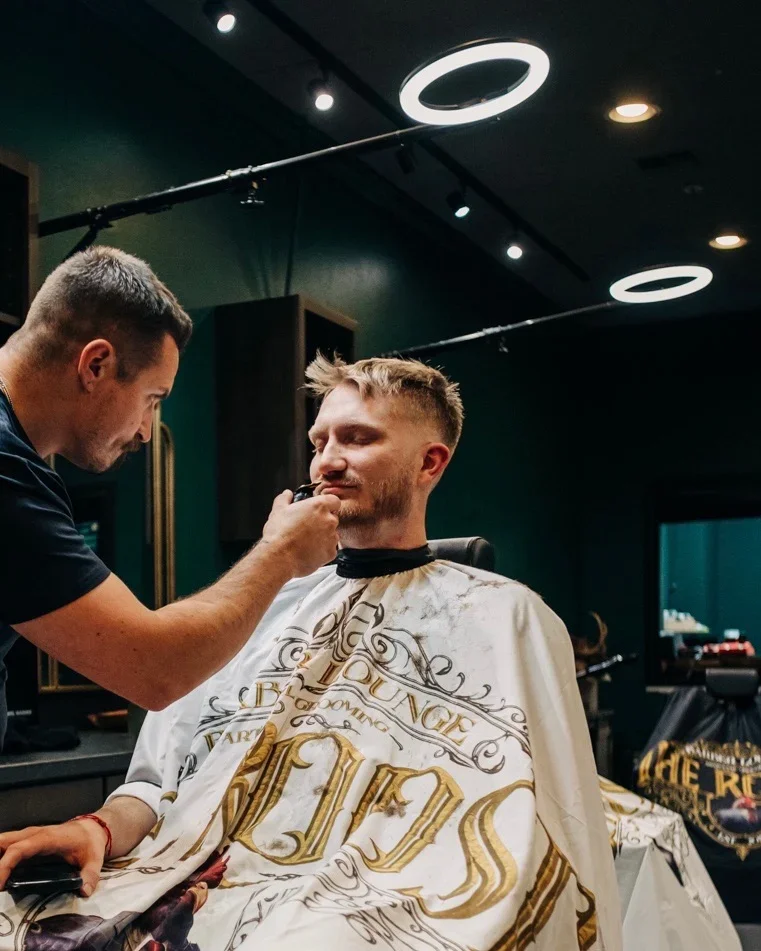
If your beard has enough length but looks untidy, uneven, or difficult to maintain, it might be time to let a professional take a look.
Beard grooming isn't just about taking a trimmer to the sides and hoping for the best. The details matter, especially when you're working with uneven growth or trying to create a shape that complements your face.
Three Details That Make a Difference
Cheek lines: A clean cheek line can sharpen the overall look without removing too much of your natural coverage. Take it too low, and you may make a sparse beard look even sparser. Not exactly the goal.
Neckline: Defining the lower edge gives your beard a more intentional finish. A neckline that's too high can make the beard look disconnected, while one that's too low can leave things looking messy.
Length and shape: The right length can balance your chin and jaw while making uneven growth less noticeable. Sometimes a little less length is exactly what the beard needs.
Your neckline deserves a little attention, too. A barber can help define the area around your Adam's apple and clean up stray hairs without taking the beard too high.
That's the point of professional beard grooming: not changing how your hair grows, but making the most of what you've got.
At The Roost Bend, our Beard Grooming service is about helping you find a shape that works with your facial hair, face shape, and routine. Whether you're keeping things short and clean or growing out a fuller beard, a professional trim can help you get there with a little more intention.
Frequently Asked Questions About Beard Growth
At What Age Does Beard Growth Stop?
There's no single age when beard growth stops for everyone. According to the Cleveland Clinic, many beards continue developing in thickness and coarseness between ages 18 and 30. Genetics and individual development affect the timeline, and some men naturally retain sparse areas.
When Should I See a Doctor About Patchy Beard Growth?
See a healthcare professional if you notice sudden bald patches, smooth round areas without hair, or unusual changes in beard coverage. These symptoms may need medical assessment. If your beard has always grown unevenly without other concerning changes, a barber can help you explore suitable grooming options.
Get Your Beard Shaped for the Look You Want
You can spend months chasing beard growth tricks. Or you can focus on what actually makes a difference: taking care of your facial hair, understanding your natural growth pattern, and finding a style that suits you.
A great beard isn't necessarily the fullest beard in the room. It's the one that's well-maintained, fits your face, and looks like you meant to grow it.
Ready to get your beard dialed in? Book The Works at The Roost Bend and let our barbers help you find the right shape, clean up the details, and make the most of what you've got. Your beard doesn't need a miracle. It just needs a little direction.