Mature Hairline or Receding? How to Tell the Difference

Your hairline doesn't look quite the same anymore. Maybe your temples have moved back, your hair feels thinner, or you're just not getting the same coverage you used to.
If you're wondering about mature hairline vs receding, you're not alone. It can be tough to tell, especially when an M-shaped hairline or slightly higher temples can look similar in both situations.
The bigger question is whether your hairline has settled or keeps changing. And once you've noticed a difference, there's another question worth asking: what do you actually want to do about it?
Mature Hairline or Receding: What's the Difference?
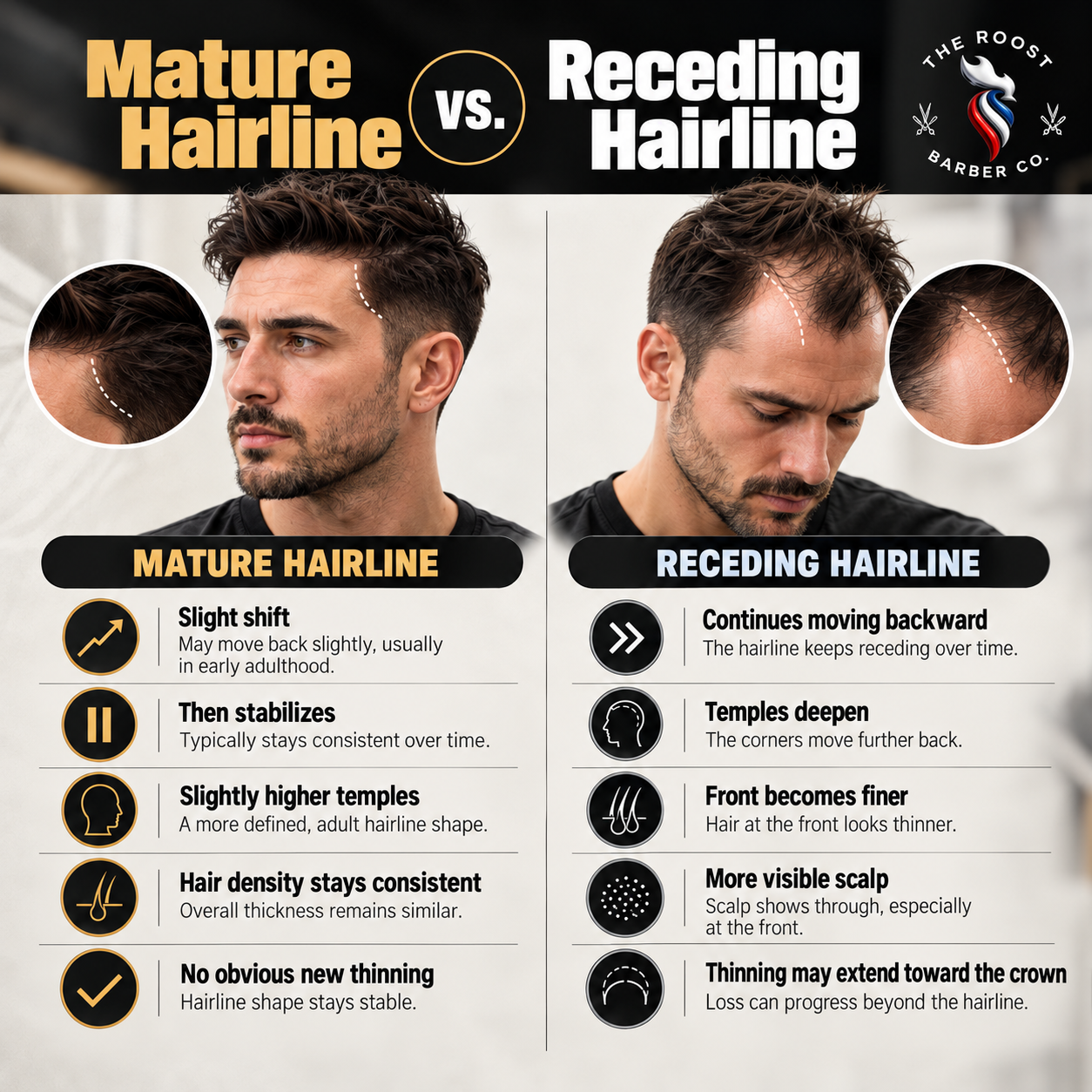
Here's the easy version. A mature hairline usually shifts slightly from its younger position and then settles, while a receding hairline keeps changing over time.
With a mature hairline, your temples may look a little higher or more defined, but the overall hairline stays fairly consistent. With recession, you may notice the temples continuing to move backward, the front becoming thinner, or more scalp showing than before.
So the biggest difference isn't necessarily the shape of your hairline. It's what happens over time.
An M-shaped hairline doesn't automatically mean you're losing your hair. A widow's peak doesn't either, so don't let one mirror check convince you that your hairline has already written its memoir.
If you're unsure, compare older photos taken in similar lighting and from similar angles. You're looking for a pattern over time, not one unfortunate photo taken directly under a bathroom light.
Can a Mature Hairline Become Receding?
Yes, it can. You can have a mature hairline that stays relatively stable for years and later start noticing continued recession or thinning.
That doesn't mean the mature hairline was secretly recession all along. It means your hair can change later, which is why paying attention to the pattern matters more than obsessing over the exact shape of your hairline today.
Hmm, Okay. What Can I Actually Do About It?
This is usually the part that matters more than the label.
Once you've noticed a change, you don't need to become an expert in hair loss or start analyzing your temples under three different types of lighting. You need to figure out what you want your hair to look like now and which option gets you there.
For some guys, that means working with their natural hairline and getting a better haircut. For others, especially when thinning or reduced coverage has become the bigger issue, it may mean looking beyond the haircut.
Option 1: Work With Your Hairline
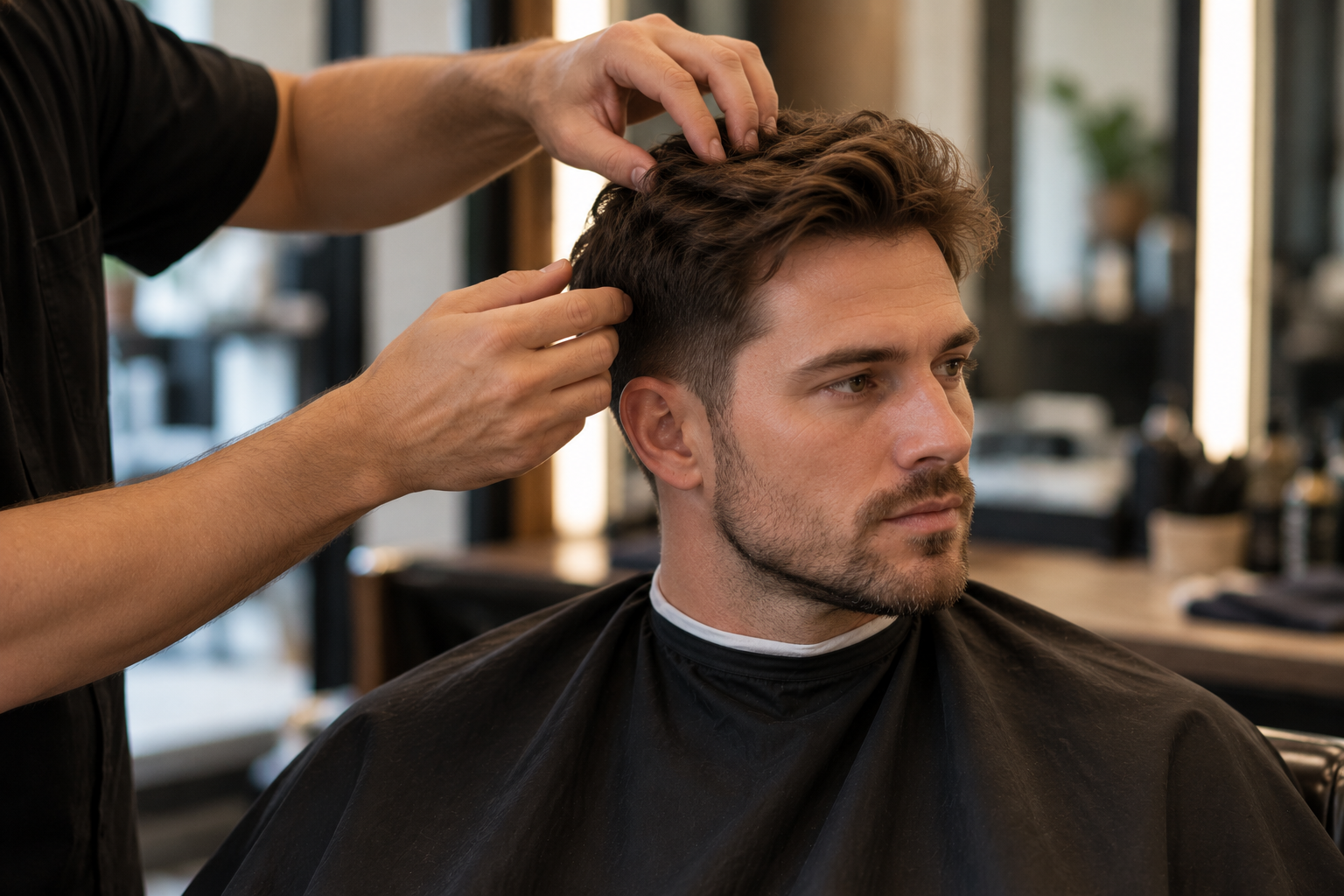
A good haircut can make a bigger difference than you might expect. Your barber can adjust the length and shape around your natural hairline instead of trying to force it into the shape it had ten years ago. The right men’s haircut should work with your hairline, texture, and routine—not against them.
Your hair density, texture, face shape, and maintenance routine all matter here. If thinning is part of the picture, it also helps to choose a haircut that works with thinner hair rather than trying to fight it. The goal isn't to hide your hairline at all costs; it's to find a cut that looks intentional and still works when it grows out.
If you're not sure what style makes sense, tell your barber what you don't like about your current cut. That's usually more useful than walking in with a photo and hoping your hair decides to cooperate.
Option 2: Consider Hair Replacement
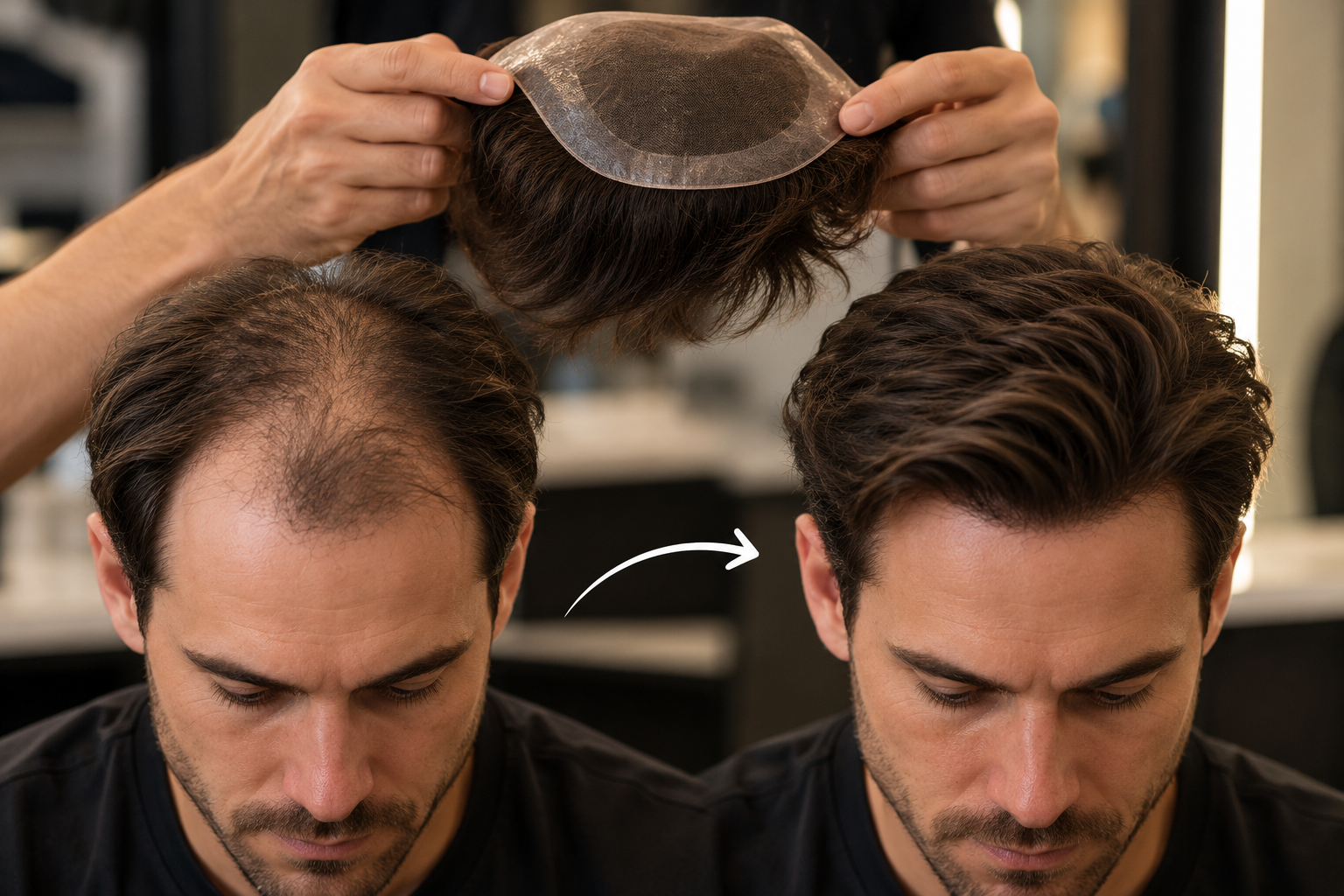
But sometimes the issue isn't the haircut.
If you're dealing with noticeable thinning or you're simply not happy with the amount of coverage you have, hair replacement options are another option worth considering. It gives you another way to address the appearance of hair loss instead of constantly adjusting your haircut or styling routine around it.
And no, you don't have to wait until you're completely bald to explore your options. If your hair has started affecting how you feel about your appearance, it's reasonable to look at solutions before it becomes an even bigger concern.
Hair Replacement at The Roost
This is where The Roost's hair replacement service comes into the conversation. It's a non-surgical option for guys who want to explore a fuller-looking head of hair rather than continuing to work around noticeable thinning.
Maybe you've been adjusting your hairstyle to cover certain areas. Maybe you're tired of thinking about your hairline every time you get ready, and you'd rather find a solution that gives you more confidence in how your hair looks.
You don't have to commit to anything just because you're curious. If you're considering it, you can start by learning what to expect from a hair replacement consultation, then decide whether it makes sense for what you're looking for.
Which Option Makes Sense for You?
If you're mostly frustrated with how your current haircut works with your hairline, start with the haircut. A Roost barber can help you find a style that fits your hair, face, routine, and the amount of maintenance you're actually willing to handle.
If the bigger issue is thinning or reduced coverage, hair replacement may be worth exploring. That's a different problem, so it makes sense to consider a different solution.
And you don't necessarily have to choose one or the other. A good haircut still matters whether you're working with your natural hair or exploring hair replacement. Once you find a cut that works, knowing how often to get a haircut can help you keep the shape looking sharp as your hair grows out.
What Should You Tell Your Barber?
A lot of bad haircut experiences aren't actually caused by bad haircuts. You walk in with one idea in your head, say “just clean it up,” and somehow leave wondering how things got this far.
If your hairline is bothering you, say so. Knowing how to talk to your barber about your hairline can make the conversation much easier. Tell your barber what you're trying to achieve, what you don't like about your current hair, and how much maintenance you're realistically willing to do.
Reference photos help, too, but don't treat them like blueprints. Your hair texture, density, face shape, and natural hairline all change the final result.
The goal isn't to copy somebody else's haircut. It's to find the version that actually works for you.
What Can a Barber Help With?
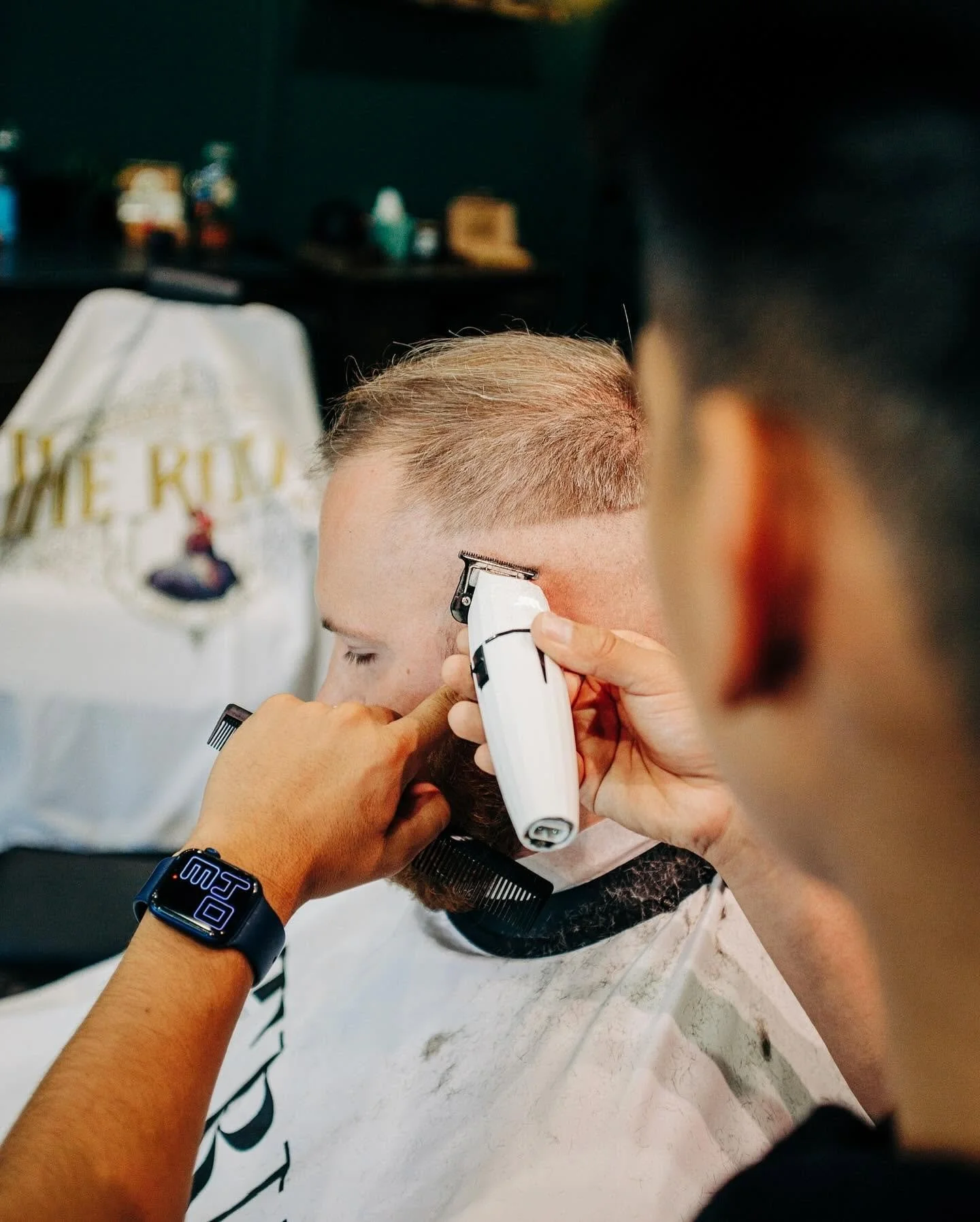
A barber can help you make better decisions about your current hair. That might mean choosing a cut that suits your hairline, adjusting the length, working with your density, or finding a style that fits your face and routine.
What a barber can't do is diagnose the medical cause of hair loss. If your hair loss is sudden, patchy, rapidly progressing, or comes with symptoms like pain, burning, intense itching, redness, or sores, that's something to discuss with a healthcare professional.
But if your concern is simply, “My hair looks different and I don't know what to do with it,” that's exactly the kind of conversation a good barber can help with.
When Should You Talk to a Dermatologist?
Not every changing hairline needs medical attention, but some changes are worth getting checked.
If you're experiencing sudden or patchy hair loss, unusually heavy shedding, rapid changes, or scalp symptoms such as pain, burning, intense itching, redness, swelling, scaling, or sores, talk with a healthcare professional.
Your barber can help with the haircut and grooming side of the conversation. A healthcare professional can evaluate what's causing the hair loss.
Where Do You Go From Here?
A mature hairline and a receding hairline can look similar at first. The difference is usually in the progression: a mature hairline tends to settle, while ongoing recession continues to change the shape and density of your hair.
But once you've noticed a change, you don't have to spend all your time trying to figure out the perfect label. The more useful question is what do you want to do next?
Maybe that's a haircut that works with your current hairline. Maybe you want to explore hair replacement for more coverage, and that's completely reasonable too.
At The Roost, the goal is simple: help you figure out what actually works for you. If you're ready to explore your options, learn more about hair replacement or book a cut with a Roost barber and talk through what makes sense for your hair.