Maybe you've noticed your hair isn't doing what it used to.
The hairline has moved back, the top feels thinner, and you're spending more time in the mirror trying to make less hair look like more. We've all seen that game, and it usually doesn't get more fun.
If you're looking at hair replacement vs hair transplant in Oregon, you're probably trying to figure out what actually makes sense for you. Both can address the appearance of hair loss, but they're very different roads to get there: a hair system can give you visible coverage without surgery, while a hair transplant moves your own follicles and asks you to wait for them to grow.
Neither is automatically the better move.
A transplant means surgery, recovery, and patience, while hair replacement means ongoing maintenance and eventually replacing the system. The real question is which set of tradeoffs makes more sense for your life.
Hair Replacement vs. Hair Transplant at a Glance
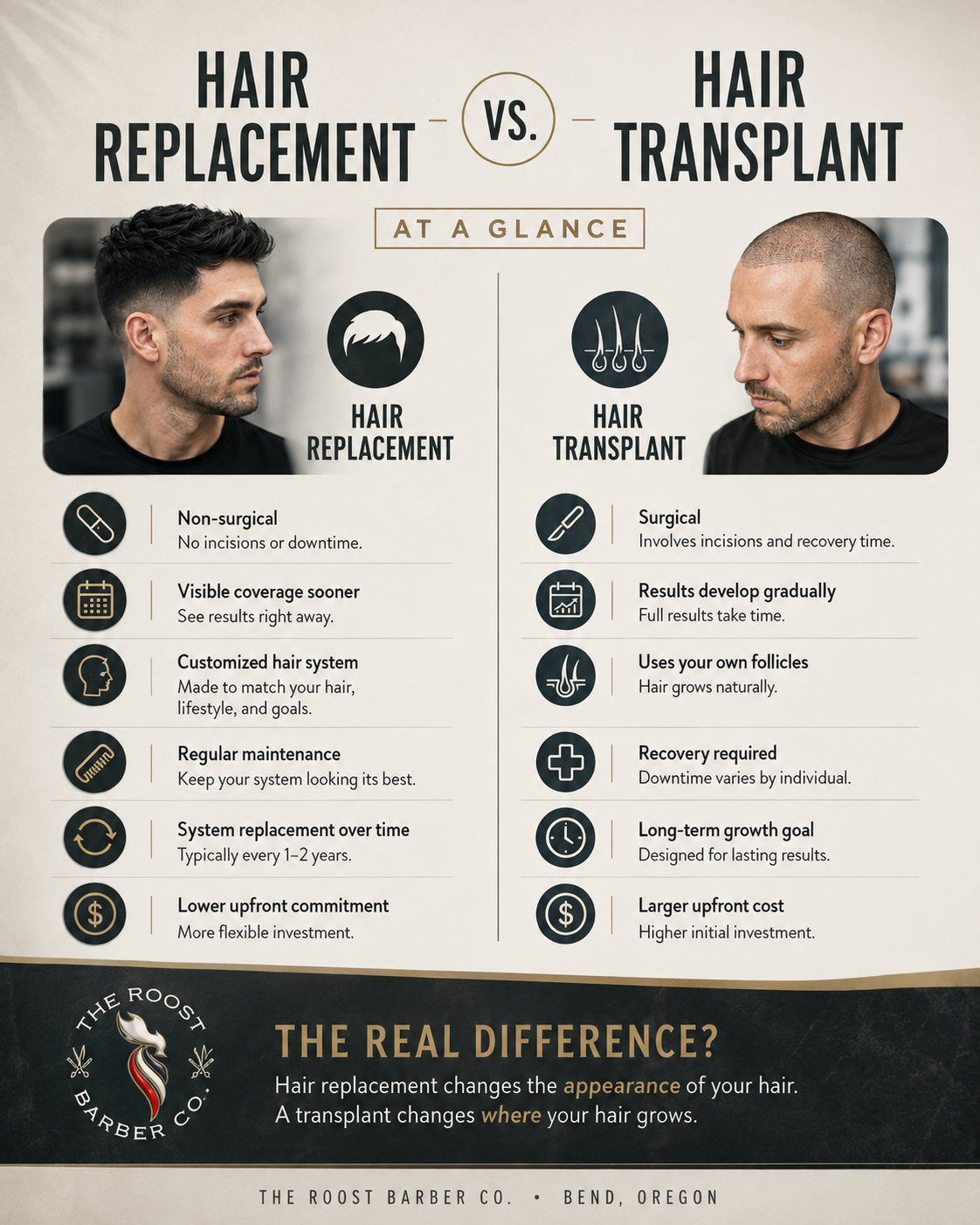
Here's the quick version. The treatment matters, but so does what you're signing up for afterward.
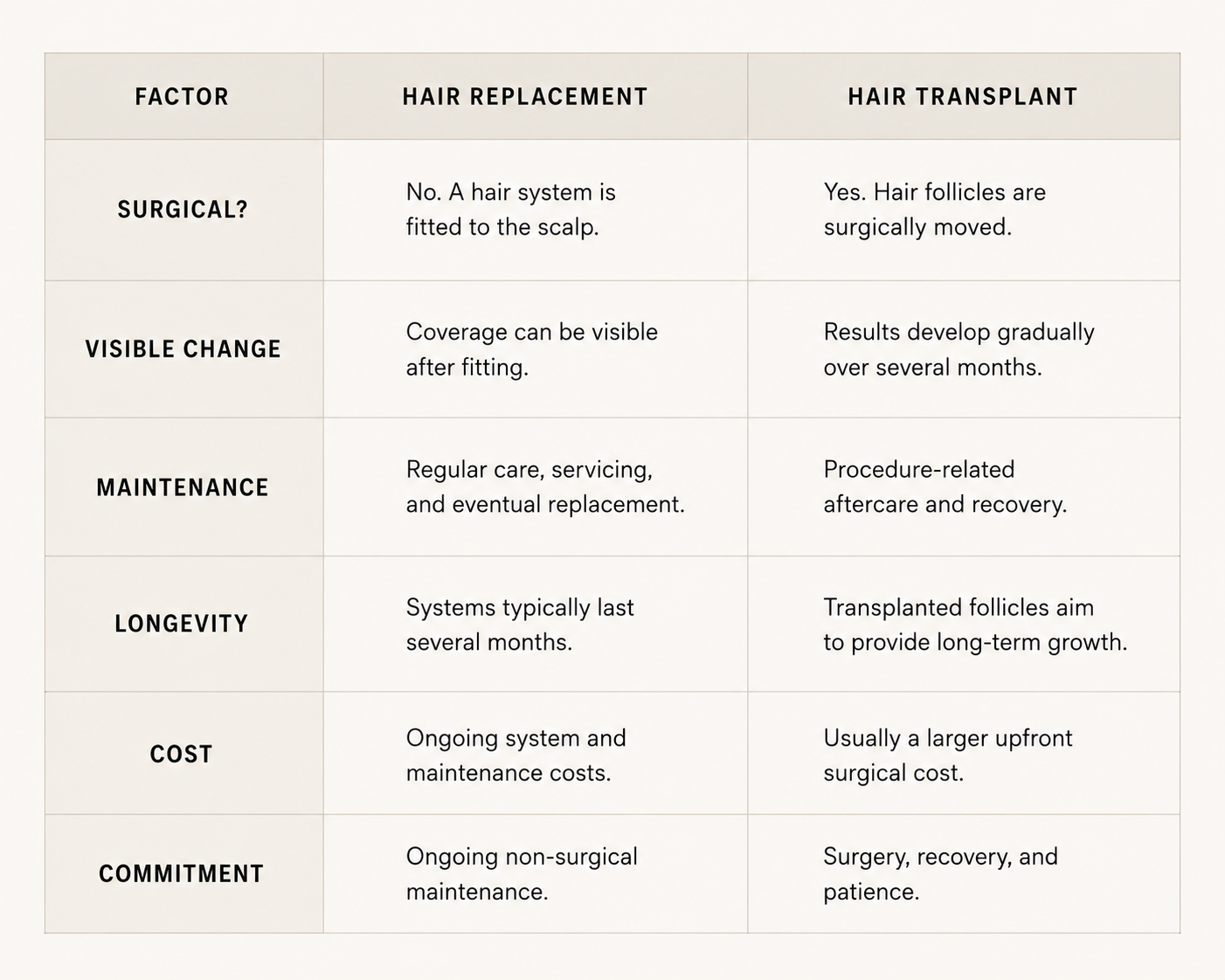
If you're leaning toward the non-surgical route,explore hair replacement at The Roost and see what the process actually involves.
First, What's the Difference?
Hair restoration terminology has a way of making a pretty simple decision sound complicated. Here's the part that matters: hair replacement changes the appearance of your hair, while a hair transplant changes where your hair grows.
What Does Hair Replacement Actually Do?
Hair replacement uses a hair system to create the appearance of fuller hair in areas affected by thinning or balding. There's no surgery and no waiting months for new growth, which is a pretty big deal if you're looking for a visible change sooner rather than later.
The system is fitted and customized around your hairline, density, color, existing hair, and preferred style. If you want to see how that works specifically for men, learn more about hair replacement for men near Bend.
What Does a Hair Transplant Actually Do?
A hair transplant takes the surgical route. A surgeon removes hair follicles from a donor area and places them into areas affected by hair loss, with FUE and FUT being two common techniques.
FUE extracts individual follicles, while FUT removes a strip of scalp tissue and separates the follicles before transplantation. Those follicles can then grow hair in their new location, but the finished result takes time.
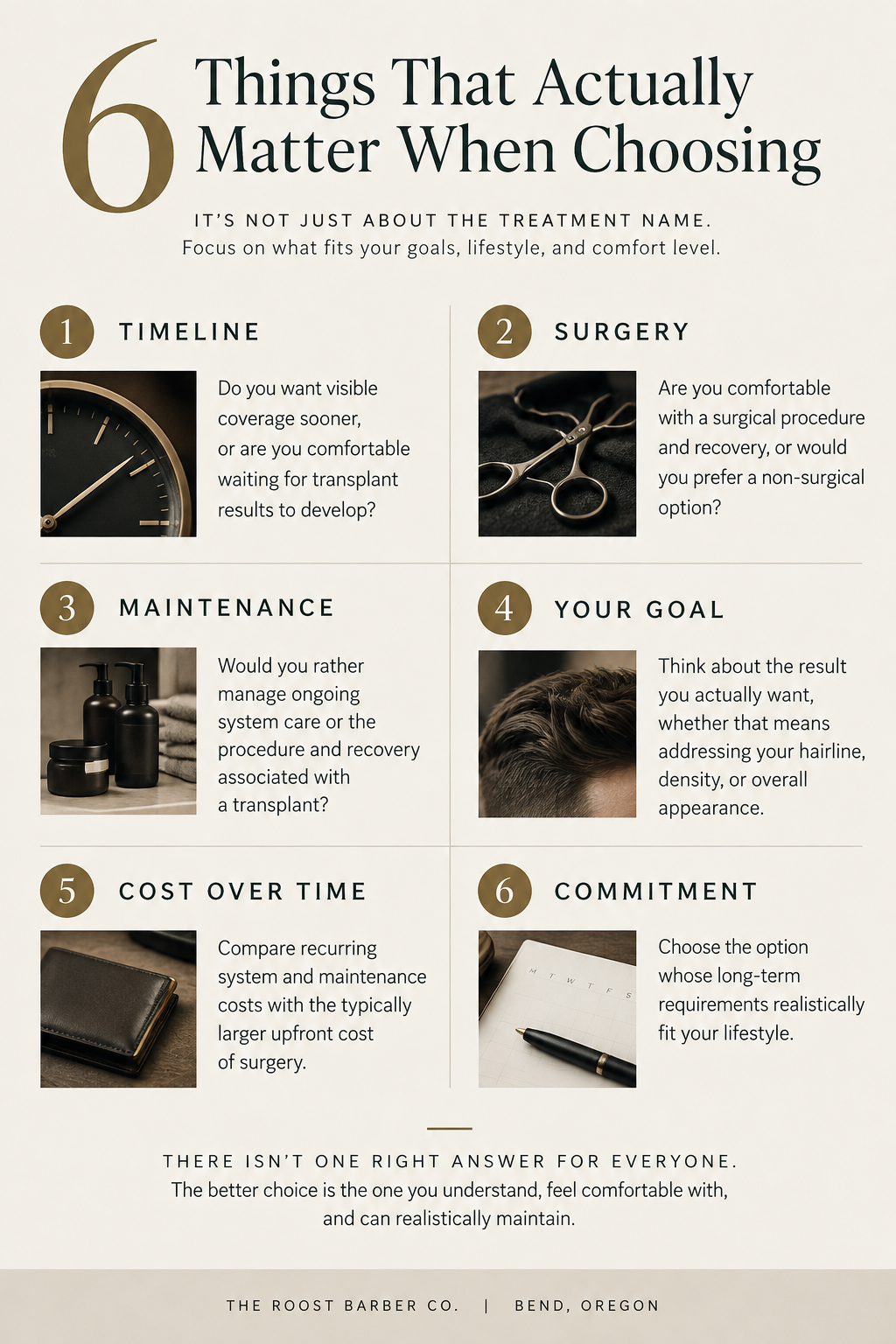
6 Things That Actually Matter When Choosing
If you were sitting in the chair asking me which way I'd go, these are the things I'd want you to think about. The treatment name matters less than what you're actually comfortable living with afterward.
1. How Quickly Do You Want to See a Change?
Timeline matters. Hair replacement can provide visible coverage once the system is fitted, while a transplant is a much longer game, with early new growth generally beginning around months three to four and the full result taking roughly 12 to 18 months to mature.
Got a wedding coming up? New job? Big event? If you don't want to spend the next year waiting to see where things are going, that timeline deserves some attention.
2. Are You Comfortable With Surgery?
A hair transplant is surgery, which means a procedure, recovery, medical aftercare, and following your provider's instructions while everything heals. Hair replacement is non-surgical, so there is no transplant procedure or surgical recovery period.
If surgery is the part you're trying to avoid, don't talk yourself out of that preference. That's not a small detail; it may be the deciding factor.
3. How Much Maintenance Fits Your Routine?
Neither option is completely maintenance-free. Hair replacement requires regular care, servicing, and eventual system replacement, while a transplant asks more from you around the procedure and recovery and can generally be treated more like natural hair once healed.
So don't ask which one has no maintenance. Ask which kind of maintenance you're actually willing to live with.
4. What Kind of Result Do You Want?
Don't just say you want "more hair." Maybe it's your hairline that's bothering you, maybe you want more density through the top, or maybe you're tired of styling around thinning areas.
Hair replacement allows the appearance of your hairline and density to be customized, while a transplant depends on factors like your donor hair, hair loss pattern, and medical suitability.
The better question isn't, "Which gives me more hair?" It's "What do I want my hair to look like when this is done?"
5. What Does the Cost Look Like Over Time?
Don't get hung up on the first price you see. Hair replacement can involve recurring costs for the system, maintenance, and eventual replacement, while a transplant usually means a larger upfront surgical expense.
Different price structure, different commitment. Look at the whole picture instead of deciding based on the number attached to the first appointment.
6. How Much Commitment Are You Comfortable With?
Both options require commitment, but they ask for different things. Hair replacement means maintaining a system over time, while a transplant means surgery, recovery, and patience while the result develops.
Neither is a magic button. The smarter move is the one you can realistically see yourself sticking with.
What Does Hair Replacement Look Like in Real Life?
A hair system isn't just hair placed on your head and called done.
The finished result comes down to several details working together, and those details are what separate a natural-looking result from one that feels like it was simply added on.
Hairline, Density, and Fit
A natural-looking system starts with proportion. Hairline design, density, base material, attachment, and styling all affect the finished look, while customization helps the system work with your existing hair and features.
And more hair isn't automatically better. A hairline that fits your face and existing hair will usually look better than chasing maximum density just because you can.
Making It Work With Your Routine
Your hair system should fit the way you actually live. Tell your barber how you normally wear your hair, talk about your hair texture and how much time you spend getting ready, and don't leave out the fact that you're an active guy if you are.
A style can look fantastic in the chair and become a daily headache by Tuesday. That's not a good recommendation, which is why your routine should be part of the conversation from the start.
If you're interested in the broader grooming experience, you can alsoexplore The Lounge.
Maintenance and Replacement
Hair replacement isn't set-it-and-forget-it. Systems need regular care, servicing, and eventual replacement, with research reviewed for this article giving a broad lifespan of roughly three to 12 months depending on the system and how it's used.
Base type, hair quality, lifestyle, and care routine all play a role. That's simply part of the deal, and it's better to know it before you commit.
What About a Hair Transplant?
This is where we'd tell you to talk to a doctor. A hair transplant is a medical procedure, and whether you're a good candidate isn't something your barber should guess at.
A qualified surgeon needs to consider things like your hair loss pattern, donor hair, health, and expectations. They'll also explain the technique, risks, recovery, and expected result before you make the call.
The timeline is worth remembering, too. Transplanted follicles go through a growth cycle, with early new growth generally beginning around months three to four and full maturation taking roughly 12 to 18 months.
Which Option Makes More Sense for You?
Let's make this practical.
If you want visible coverage sooner or surgery isn't for you, hair replacement is worth exploring. If you're comfortable with surgery and willing to wait for the result, talk with a qualified medical professional about a transplant.
Don't want an ongoing hair system routine? A transplant may appeal to you once healed. Not ready for either?Haircuts for thinning hair can help you work with what you've got while you figure out what's next.
Still stuck?
Focus on six things: timeline, surgery, maintenance, desired result, cost, and commitment. You don't need a spreadsheet for this. Just honest answers.
Hair Replacement vs. Hair Transplant Cost
Research reviewed for this article places many U.S. hair transplant procedures in the roughly $4,000 to $15,000 range, although technique, graft count, location, and individual treatment plans can change that significantly. Verify current pricing before making a decision based on a specific number.
A transplant usually means a larger upfront surgical expense, while hair replacement can mean recurring costs for the system, maintenance, and eventual replacement. You're not really comparing two identical price tags here, so looking only at the first number won't tell you much.
More importantly, don't just ask which one is cheaper. Ask which one makes sense for what you're trying to accomplish, because the cheapest starting price isn't necessarily the better value if the solution doesn't fit your goals or routine.
Common Questions About Hair Replacement
Will People Be Able to Tell I'm Wearing a Hair System?
A properly fitted and styled hair system is designed to look natural, not like something sitting on top of your head. Hairline, density, fit, attachment, and styling all make a difference. The goal isn't maximum hair. It's a result that works with your features and looks like it belongs there.
Can I Still Exercise or Live an Active Lifestyle With Hair Replacement?
Yes, but your lifestyle should be part of the conversation when choosing a system. Different systems and attachment methods can have different care requirements. Tell your barber how active you are, and they'll help you choose an approach that fits your routine instead of asking you to completely change it.
Can I Style a Hair System Like My Own Hair?
Yes. A hair system can be cut and styled around the look you want. Your hair texture, existing hair, density, and normal styling habits all matter when choosing the right approach. The goal is to create something that works with how you actually wear your hair, not give you another routine to fight with.
Do I Have to Be Completely Bald for Hair Replacement?
No. Hair replacement can work with different degrees and patterns of thinning and hair loss. You don't have to wait until you've lost most of your hair to explore your options. The right approach depends on the areas you're trying to address, how much coverage you want, and the result you're after.
What If I'm Not Sure I'm Ready?
That's completely fine. You don't need to know which system you want or have your entire hair plan figured out before starting. Tell your barber what bothers you about your current hair, what you'd like to change, and how you live. From there, you can figure out whether hair replacement actually makes sense for you.
So, Which One Should You Choose?
Here's the straight answer: choose hair replacement if you want visible coverage without surgery and you're comfortable with ongoing maintenance. Consider a hair transplant if you're comfortable with surgery, have appropriate medical candidacy, and are willing to wait for the result to develop.
Neither choice is automatically better. You're choosing between two very different ways of dealing with hair loss, and the right one is the one that fits your goals, your routine, and your tolerance for the tradeoffs.
At The Roost, we can help you understand what hair replacement can actually do and whether it fits the way you want to look and live. You don't need every answer before you walk in.
Explore our hair replacement service, see how the process works, and start with a conversation.