Fade vs. Taper: Which One Should You Pick?
What's the Main Difference
The main difference between a fade and a taper is how far down the hair goes. A taper gradually shortens the hair around your temples, sideburns, and neckline but always leaves some hair visible at the edges. A fade takes it all the way down, blending the hair to bare skin or very close to it, with a noticeably higher contrast between the top and the sides. Same general idea, completely different result.
We hear these two terms used interchangeably at The Roost every single day. Most guys don't know the difference when they sit down, and that's fine. That's exactly what the consultation is for. But if you want to walk in knowing what to ask for, this breaks it down plainly.
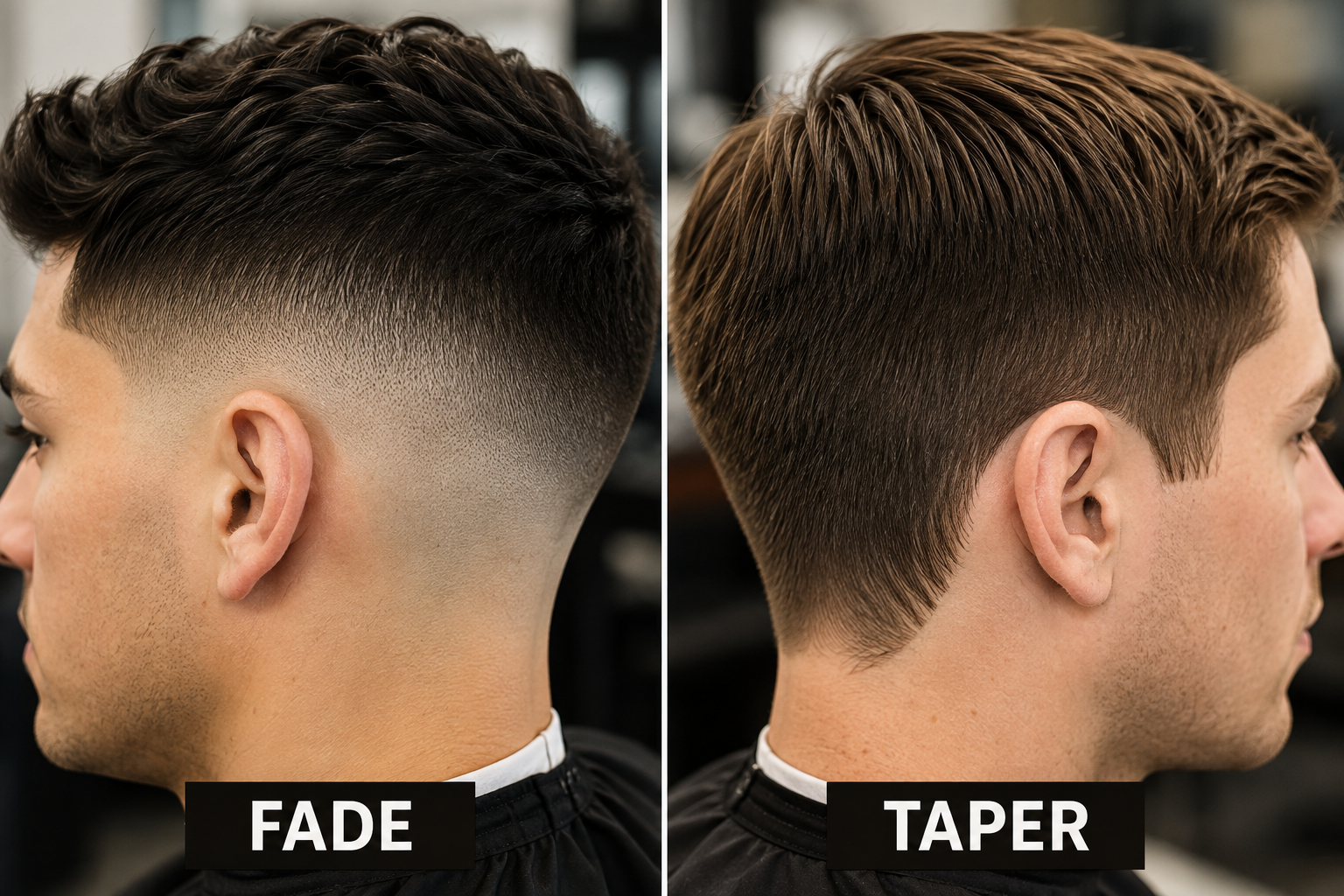
Think of It Like a Dimmer Switch vs. a Light Switch
The easiest way to picture the difference: a taper is a dimmer switch. The hair gradually gets shorter as it moves toward your neckline and around your ears. It's subtle, it's controlled, and you always see some hair at the very bottom. It never disappears.
A fade is more like a light switch. The hair makes a dramatic shift, dropping down aggressively -- often all the way to bare skin -- so the contrast between the longer top and the cropped sides is sharp and immediate. That's the look people are going for when they want something clean and defined.
Both are good haircuts. They just say different things.
What Is a Taper Haircut?
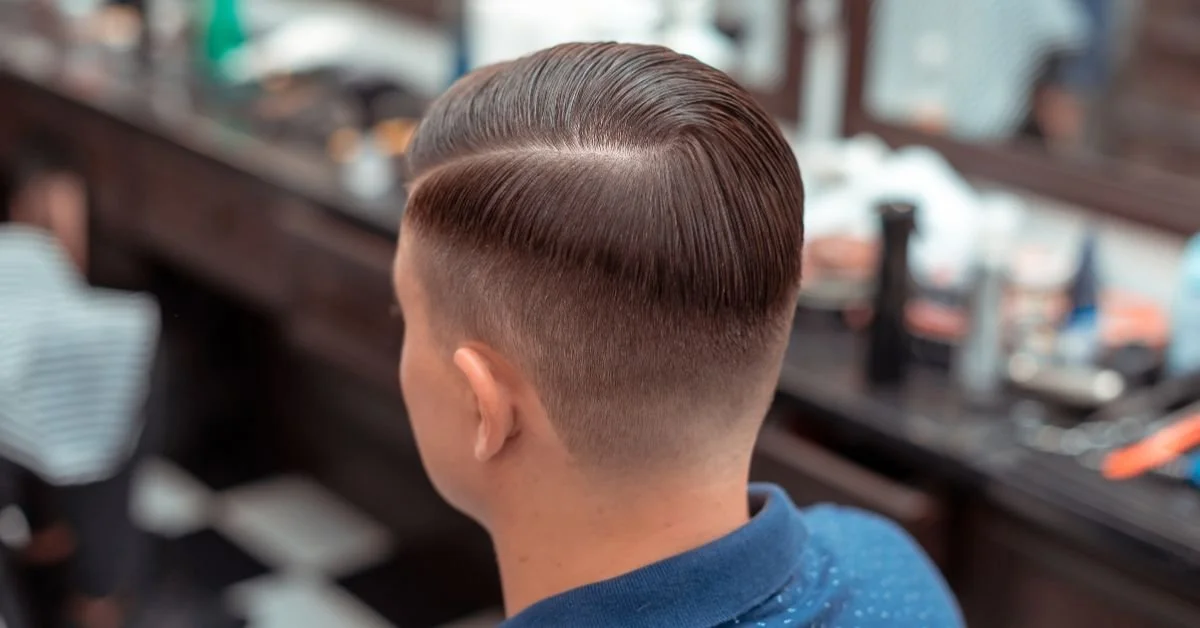
A taper keeps hair visible at the perimeter of your head -- around the temples, the sideburns, and the neckline -- while gradually reducing the length as it moves down. The hair never disappears. The transition is smooth and controlled, and your natural hairline stays intact.
Tapers are versatile. They work in a boardroom, on a job site, and on a Saturday in Bend. They grow out without looking unkempt, which is why most guys who aren't getting a cut every two weeks tend to prefer them. The shape holds longer because the contrast is subtle to begin with.
We recommend a taper for guys who want something clean and professional that can go four to six weeks without falling apart. According to FashionBeans, a taper is actually a finishing technique that most barbers apply to every good haircut as a baseline -- the question is just how much further you want to take it from there.
What Is a Fade Haircut?
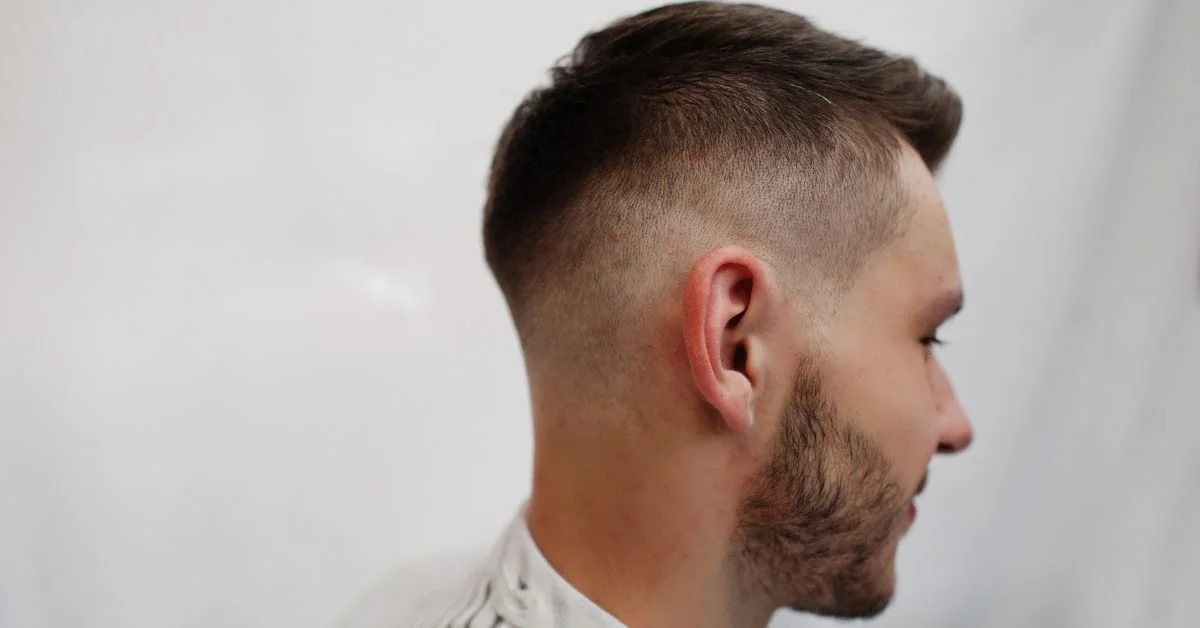
A fade takes everything a taper does and pushes it further. The hair blends all the way down, usually to bare skin or a shadow finish, and wraps around the back and sides of the head. The contrast between the length on top and the closely cropped sides is the whole point.
Fades come in three heights: low, mid, and high. The height tells you where the shortest part of the fade begins.
A low fade starts just above the ear and around the neckline. It gives you a sharp look without being dramatic. Most guys walking into The Roost asking for "just a clean cut" leave with a low taper fade -- it's the sweet spot between defined and versatile.
A mid fade starts higher, around the temples, and creates more contrast. Bold but wearable.
A high fade starts above the temples and gives you the most dramatic contrast of the three. It's a statement. It needs more frequent visits to stay sharp.
The sharper the fade, the more maintenance it demands. A skin fade looks incredible the day you get it. By week two, the regrowth starts to soften the line. That's not a problem if you're back in the chair every two to three weeks. It's a consideration if your schedule is less consistent.
The Taper Fade: When You Want Both
Here's where it gets useful. Most of what we cut at The Roost isn't a pure taper or a pure fade. It's a taper fade -- a hybrid that blends the soft transition of a taper with the cleaner finish of a low or mid fade.
When a client tells us they want something sharp but not too aggressive, that's usually where we land. The blend is controlled, the contrast is there, and the grow-out is forgiving. It's the most requested style at both The Lounge and The Shop for a reason.
If you're getting your first fade or you're not sure how short you want to go, we always recommend starting with a low taper fade. You can go sharper next visit once you see how the contrast sits on your head. It's much easier to go shorter than to undo it.
Face Shape Changes the Recommendation
This is the part most guys don't think about until they're looking in the mirror. The same fade that looks sharp on one person can look off on another, and it usually comes down to face shape.
Oval faces are the most versatile -- almost any taper or fade works. Square and rectangular faces tend to look best with a low fade that keeps the sides from adding too much width. Round faces can benefit from a higher contrast fade that adds visual length. Longer faces often work better with a taper that keeps more weight on the sides.
We look at this at every consultation. Your face shape, your hair texture, and how much time you realistically spend in front of a mirror in the morning all factor into what we're going to recommend before the clippers come out.
Hair Texture Changes the Result
Thick hair holds a fade well and makes the contrast pop clearly. Fine hair can make a skin fade look patchy between visits because the regrowth shows faster. Curly hair behaves differently depending on the curl pattern -- a tight curl can make a taper look fuller and more textured than it would on straight hair, which is often a good thing.
We cut all hair types at both locations. If you've had a fade that didn't hold the way you expected, it might be a texture issue as much as a technique issue. That's something a good consultation catches before the cut starts.
Maintenance: What to Expect After You Leave the Chair
A taper can go four to six weeks before it starts losing its shape. A skin fade at peak sharpness needs a refresh every two to three weeks. A mid fade lands somewhere in the middle.
This isn't a reason to avoid fades. It's just information worth having before you sit down. If you know you're getting a cut every two weeks anyway, a high fade is a completely reasonable choice. If you're more of a once-a-month guy, a taper or a low taper fade is going to look better for longer.
See our cut options if you want to lock in a consistent style and make sure your cut always looks fresh.
So, Which One Should You Get?
Here's how we think about it at The Roost barbershop.
If you want something versatile, professional, and low-maintenance: taper or low taper fade.
If you want something sharp, defined, and you don't mind coming back every two to three weeks: mid or high fade.
If you're not sure: start with a low taper fade. It's the most requested cut at both locations for a reason. It looks good the day you get it and three weeks later. From there you can decide if you want to go sharper.
The best haircut isn't the sharpest one or the most current one. It's the one that fits your routine, your face, and the version of yourself you want to show up as. That's what we're figuring out together when you sit down.
Book at The Lounge on Highway 20 or The Shop on 3rd Street at theroostbend.com.
Frequently Asked Questions About Fades and Tapers
What is the main difference between a fade and a taper haircut?
A taper gradually shortens the hair around the edges of the head but always leaves some hair visible at the bottom. A fade blends the hair all the way down to bare skin or very close to it, creating a higher-contrast look between the top and the sides. A taper is more subtle and forgiving. A fade is sharper and more dramatic.
Which lasts longer, a taper or a fade?
A taper lasts longer. Because the contrast is subtle and no skin is exposed, the regrowth is less noticeable. A taper can hold its shape for four to six weeks. A fade, especially a skin fade, starts to lose its sharpness after one to two weeks as the hair grows back in.
What is a low taper fade?
A low taper fade blends the hair down starting just above the ear and around the neckline, finishing close to the skin at the very bottom. It combines the softness of a taper with the definition of a fade. It's the most requested style at The Roost because it works on almost every hair type and face shape and grows out well between visits.
Is a taper or a fade better for professional settings?
A taper is the safer choice for conservative professional environments. It's clean and polished without drawing attention. A low or mid fade also works in most professional settings. A high skin fade can be a bold choice depending on the industry, though the corporate stigma around fades is much less than it used to be.
What is the difference between a skin fade and a regular fade?
A skin fade -- sometimes called a bald fade -- blends all the way down to bare skin with no hair visible at the lowest point. A regular fade blends down to a very short length but may leave a slight shadow of hair at the bottom. Skin fades give the sharpest contrast and require the most frequent maintenance.
What fade height should I ask for?
Low, mid, or high tells your barber where the shortest part of the fade starts. Low starts just above the ear -- subtle, versatile, and the most forgiving. Mid starts around the temples -- more contrast, still wearable. High starts above the temples -- bold and dramatic. When in doubt, ask for low and go from there.
Can I get a taper and a fade at the same time?
Yes. A taper fade is its own haircut that combines both. The sides blend down with the softness of a taper but reach a sharper finish than a plain taper would. It's the most common cut we do at The Roost because it sits in the sweet spot between clean and defined.
How do I ask for a taper or fade at the barbershop?
Tell your barber whether you want a taper or a fade, what height (low, mid, or high), and whether you want it to go to skin or leave a shadow. Then describe the top -- how long, what style. Bring a photo if you have one. The more specific you are, the better the result. If you're not sure, just say so and we'll figure it out together in the consultation.
Want to Learn More About Fades and Tapers?
What Is a Taper Fade?
A taper fade is a hybrid cut that blends the gradual transition of a taper with the sharper finish of a fade. The sides and back blend down progressively short but reach a clean finish near the skin at the bottom. It's one of the most requested men's haircut styles at barbershops because it works on almost every hair type, face shape, and lifestyle.
What Is a Drop Fade?
A drop fade is a variation where the fade drops lower behind the ear rather than running straight across the back of the head. The curve creates a different silhouette than a standard fade and is often used with curly or textured hair to complement the natural direction of the hair's growth.
What Is a Shadow Fade?
A shadow fade blends down to a very short length but stops just before reaching bare skin. The result is a soft, subtle contrast rather than the sharp edge of a skin fade. It's a good middle ground for men who want definition without committing to full skin exposure, and it holds up longer between visits.
What Is a Mid Fade?
A mid fade starts blending around the temple area, higher than a low fade but not as dramatic as a high fade. It creates a clear contrast between the longer top and the shortened sides and is one of the most versatile fade heights because it works in both casual and professional settings.