How Much Does Hair Replacement Cost in Bend, OR?
Hair replacement cost can range from a few hundred dollars to more than $10,000. Fair question. But the price alone doesn't tell you much.
A guy getting a hair transplant isn't buying the same thing as someone choosing a custom hair system. They're solving the same problem in completely different ways.
The better question is this: what are you actually paying for?
Whether you're considering a hair transplant, a non-surgical hair system, or another treatment, here's what affects the price, where the hidden costs show up, and how to figure out which option actually fits you.
If you're exploring a non-surgical solution in Bend, Oregon, take a look at our hair replacement services to see what's possible.

What Does Hair Replacement Cost?
The short answer? It depends.
Some treatments cost a few hundred dollars. Others cost well over $10,000. That's a huge gap, but it makes sense once you understand what's included.
Here's where a lot of guys get tripped up.
They compare the upfront price without thinking about everything that comes after.
Let's say one person spends around $8,000 on a hair transplant. Another starts with a custom hair system for much less. At first, the hair system looks like the cheaper option. A few years later, after maintenance and replacements, the total investment might not be all that different.
That's why we wouldn't compare price alone.
Compare the whole experience.
Average Hair Replacement Cost
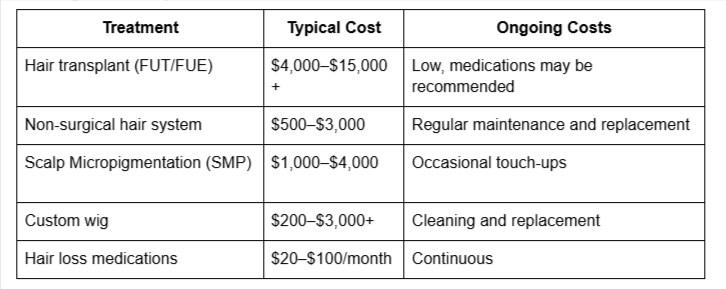
These are national averages. Your actual cost depends on your hair loss, the treatment you choose, and the provider you work with.
Why Hair Replacement Costs Vary
Ever wonder why one person gets quoted $5,000 while someone else hears $10,000 for what sounds like the same treatment? Because it usually isn't the same treatment.
Your hair, your goals, and the amount of work involved all affect the final price.
Here are the biggest factors.
Your Treatment Choice
Every treatment is priced differently.
A hair transplant involves surgery and an experienced surgeon. A hair system costs less upfront but comes with ongoing maintenance. Treatments like SMP, PRP, and medications all have their own pricing and long-term commitment.
Your Hair Loss Pattern
More coverage usually means more work.
Someone filling in a receding hairline won't pay the same as someone restoring the entire top of their head. If you're still deciding on a long-term solution, sometimes the right haircut for thinning hair can make a noticeable difference in the meantime.
Materials and Technique
Not all systems or procedures are created equal.
Custom hair systems matched to your hair color, density, and texture usually cost more than stock systems. Hair transplants follow the same idea. Technique and graft count both affect the final price.
Provider Experience
This is one place we'd be careful about shopping on price alone.
Experience doesn't just affect the bill. It usually affects the result.
Where You Live
Location plays a role, too.
Hair restoration in Bend won't necessarily cost the same as Portland, Seattle, or Los Angeles. Different markets come with different operating costs and demand.
Compare the Cost of Every Hair Replacement Option
There's no single hair replacement treatment that's right for everyone.
Some guys want a long-term solution and don't mind surgery. Others want to walk out with a full head of hair the same day. Both are fair.
The trick isn't finding the cheapest option. It's finding the one that fits your life.
Here's what each treatment brings to the table.
Hair Transplant
A hair transplant moves healthy hair follicles from one part of your scalp to areas where hair has thinned or stopped growing. Most procedures use either Follicular Unit Extraction (FUE) or Follicular Unit Transplantation (FUT).
Nationally, hair transplant costs usually range from $4,000 to $15,000, although larger procedures can cost more. Most clinics price the procedure by graft count, so two people with similar hair loss can walk out with very different estimates.
FUT usually costs less per graft. FUE skips the strip removal and often comes with a quicker recovery. Which one makes more sense depends on your hair and what you're trying to accomplish.
Best for:
Long-term hair restoration
People with a healthy donor area
Anyone comfortable with surgery
Non-Surgical Hair Systems
Let's clear something up.
A lot of guys still picture the obvious toupees from decades ago. Fair enough. Modern hair systems are a completely different conversation.
Today's systems are custom made to match your hair color, density, and style. When they're fitted well, most people won't know you're wearing one. Most systems start between $500 and $3,000. The upfront cost is lower than a hair transplant, but regular maintenance and replacement become part of the investment.
Worth it? For a lot of guys, absolutely.
Instead of waiting months for new growth, you leave the appointment looking like yourself again. Learn more about our hair replacement services to see how modern systems deliver natural-looking results.
Best for:
Immediate results
No surgery
Full coverage
Anyone comfortable with regular maintenance
Scalp Micropigmentation (SMP)
Scalp micropigmentation doesn't grow hair. It creates the appearance of more hair by placing tiny pigment deposits into the scalp.
If you keep your hair short, the difference can be dramatic. It gives the illusion of greater density without surgery or ongoing styling. Most treatments cost between $1,000 and $4,000, with touch-ups every few years.
Best for:
Buzz cuts
Receding hairlines
Diffuse thinning
Low-maintenance lifestyles
Wigs
Wigs are another non-surgical option for immediate coverage.
Whether you choose synthetic fibers or human hair, today's wigs look far more natural than many people expect. Pricing ranges from a few hundred dollars to several thousand depending on the materials and level of customization.
Like hair systems, they need regular cleaning and eventual replacement.
Best for:
Temporary hair loss
Flexible styling
A non-medical solution
Hair Loss Medications
If you're just starting to notice thinning, medication is often the lowest-cost place to begin.
Treatments like minoxidil and finasteride typically cost between $20 and $100 per month. They're also commonly recommended after a hair transplant to help protect the hair you still have.
Just know what they do.
They help slow hair loss. They don't bring back hair that's already gone.
Best for:
Early-stage thinning
Male pattern baldness
Long-term maintenance
Quick Comparison
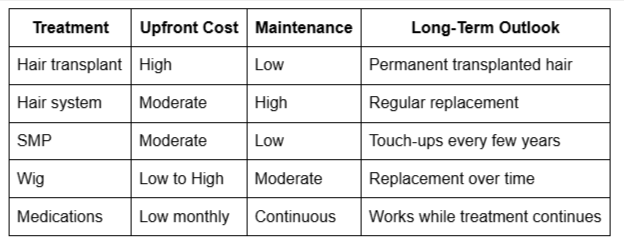
Instead of asking which option costs the least, ask yourself which one fits your routine.
A hair transplant asks for a bigger investment upfront. A hair system asks for more maintenance. Neither is automatically the better choice.
The right answer is the one you'll still feel good about a few years from now.
How Hair Transplant Clinics Calculate Cost
A lot of guys ask the same question.
"How much does a hair transplant cost?"
Fair question.
The honest answer is there isn't one price.
Hair transplants aren't priced like ordering a haircut off a menu. Two people with similar hair loss can walk into the same clinic and leave with completely different estimates.
One of the biggest reasons is graft count. Someone filling in a receding hairline usually needs fewer grafts than someone restoring the entire top of their head.
Your provider will also look at:
Your hair loss pattern
The quality of your donor area
Whether FUE or FUT is the better fit
How complex the procedure is
Whether you'll need more than one session
A good consultation shouldn't feel like someone trying to sell you something.
It should help you understand what's realistic, why your treatment costs what it does, and what kind of results you can actually expect.
If someone promises a perfect head of hair before they've even looked at yours, that's probably your sign to keep shopping.
Upfront Cost vs. Long-Term Cost
Here's something a lot of people don't think about.
The cheapest option today isn't always the cheapest five years from now.
A hair transplant usually costs more upfront, but ongoing costs are relatively low. A hair system is more affordable to get started, but regular maintenance, servicing, and replacements become part of the investment.
Neither approach is wrong. It just depends on what fits your lifestyle.
Five-Year Cost Comparison
Looking at ownership over five years often tells a different story than comparing prices today.
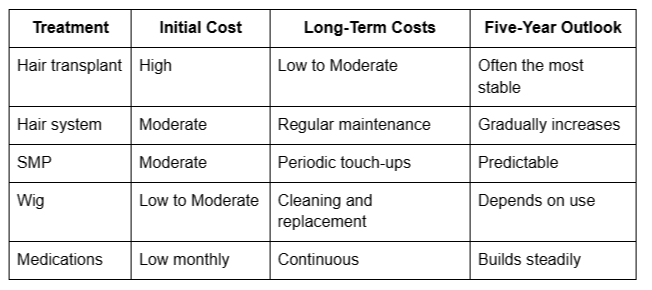
Looking at the total cost over time usually tells a different story than comparing the first invoice. That's why we'd compare the whole experience, not just the number on the quote.
Before You Decide
Whatever treatment you're considering, ask a few questions first.
How often will I need maintenance?
What products will I need?
Are follow-up appointments included?
What should I expect to spend each year?
Those answers matter just as much as the upfront price.
Which Hair Replacement Option Gives the Best Value?
That's really the question most guys are asking.
Not, "Which one costs less?"
Which one is actually worth it?
The answer depends on what matters most to you.
Some guys want a one-and-done solution they won't have to think about much after recovery. Others want to leave with a full head of hair today and don't mind coming back for maintenance.
Both are fair.
Compare Your Options
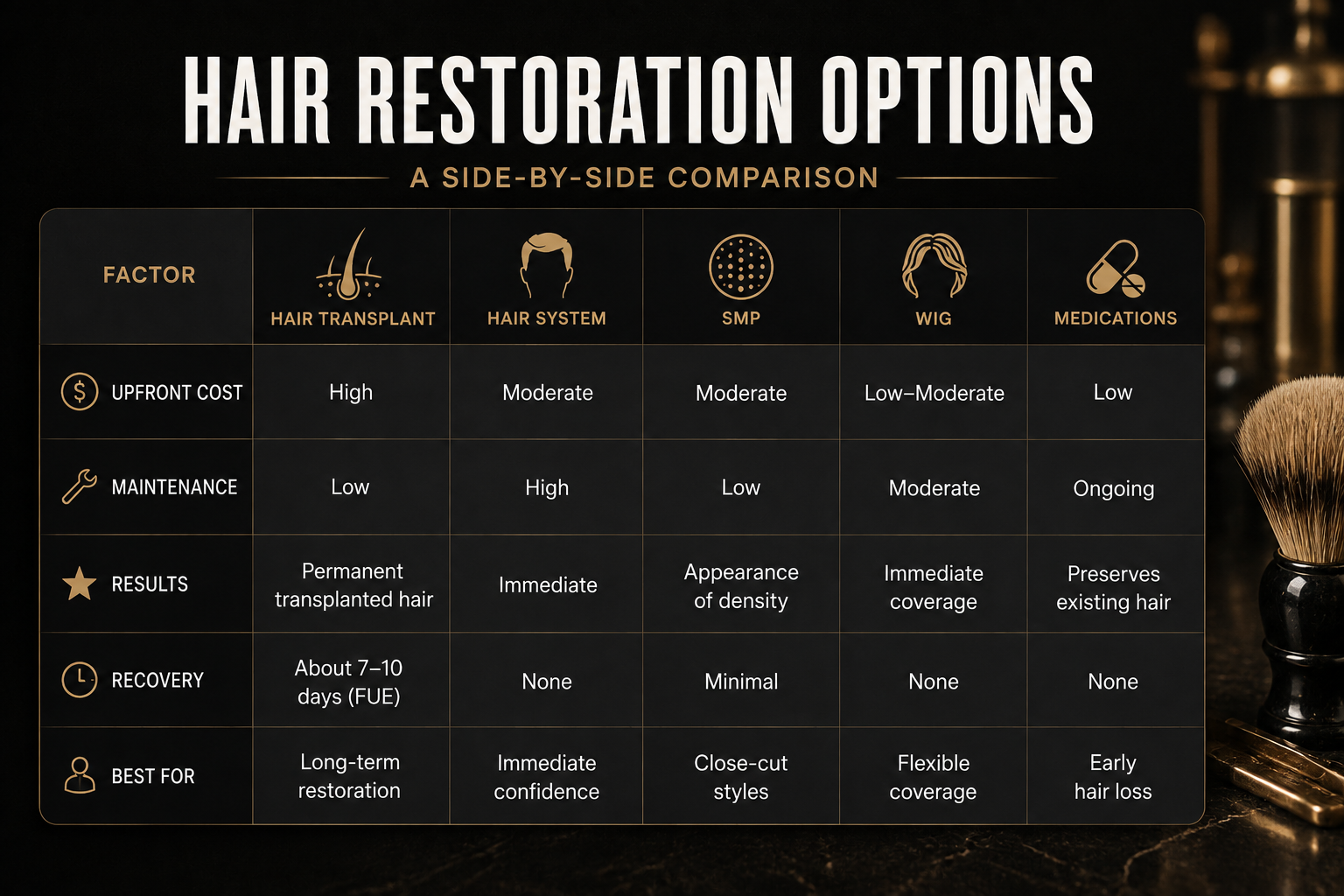
Which Option Fits Your Lifestyle?
Before you compare prices, ask yourself a few questions.
Do I want results right away?
Am I open to surgery?
How much maintenance am I actually willing to keep up with?
Would I rather spend more now or spread the cost over time?
Am I trying to keep the hair I have or replace what's already gone?
Your answers usually narrow the options faster than comparing dollar amounts.
Someone getting married next month may love the immediate results of a hair system. Someone planning for the next twenty years may decide a hair transplant makes more sense.
Neither guy is wrong. They're just buying different things.
The best treatment isn't the one with the lowest price tag. It's the one that fits your life.
Hidden Costs Many People Don't Budget For
The quote isn't always the final number.
Most providers are upfront about treatment costs, but there are a few expenses that can catch people off guard if they aren't discussed upfront.
Consultation Fees
Some providers include the consultation. Others charge separately and apply the fee toward treatment if you move forward.
It's worth asking before you book.
Maintenance Products
Hair systems require adhesives, shampoos, and cleaning products. Medications become an ongoing monthly expense. Small costs don't seem like much at first, but they add up over time.
Follow-Up Care
Some treatments include follow-up appointments. Others don't. Knowing what's included makes it much easier to compare providers fairly.
Travel Costs
If you're traveling outside Bend, don't forget to factor in hotels, gas, meals, and time away from work. A lower treatment price isn't always the better deal once travel enters the picture.
Ask for Transparent Pricing
A good provider should be able to explain exactly what you're paying for.
Before you commit, ask for an estimate that includes:
Initial treatment
Follow-up appointments
Maintenance schedule
Replacement timeline, if applicable
Recommended products
If the pricing feels confusing, keep asking questions. A good provider won't mind.
Does Insurance Cover Hair Replacement?
Usually, no.
Most hair replacement treatments are considered cosmetic, so insurance typically doesn't cover them.
There are exceptions. If your hair loss is connected to a medical condition, injury, or reconstructive treatment, your plan may cover part of the cost. It's worth checking with your provider before making any assumptions.
What About Financing?
A lot of providers offer financing because most hair restoration treatments are paid out of pocket.
Depending on the clinic, you may have access to:
Monthly payment plans
Healthcare financing
Promotional financing offers
Low or no-interest options for qualified applicants
Some clinics also accept CareCredit® or similar programs.
The important part?
Know exactly what you're signing up for before you commit.
Can You Use an HSA or FSA?
Sometimes.
Some treatment-related expenses may qualify through an HSA or FSA, depending on your plan and the reason for treatment.
It's worth checking with your plan administrator before using those funds.
How to Choose the Right Option for Your Budget
Let's make this simple.
Before you start comparing prices, ask yourself a few questions.
Do I want results right away?
Am I open to surgery?
How much maintenance fits my routine?
Am I looking for a long-term solution or something that works today?
What's my budget?
Your answers will narrow the options pretty quickly.
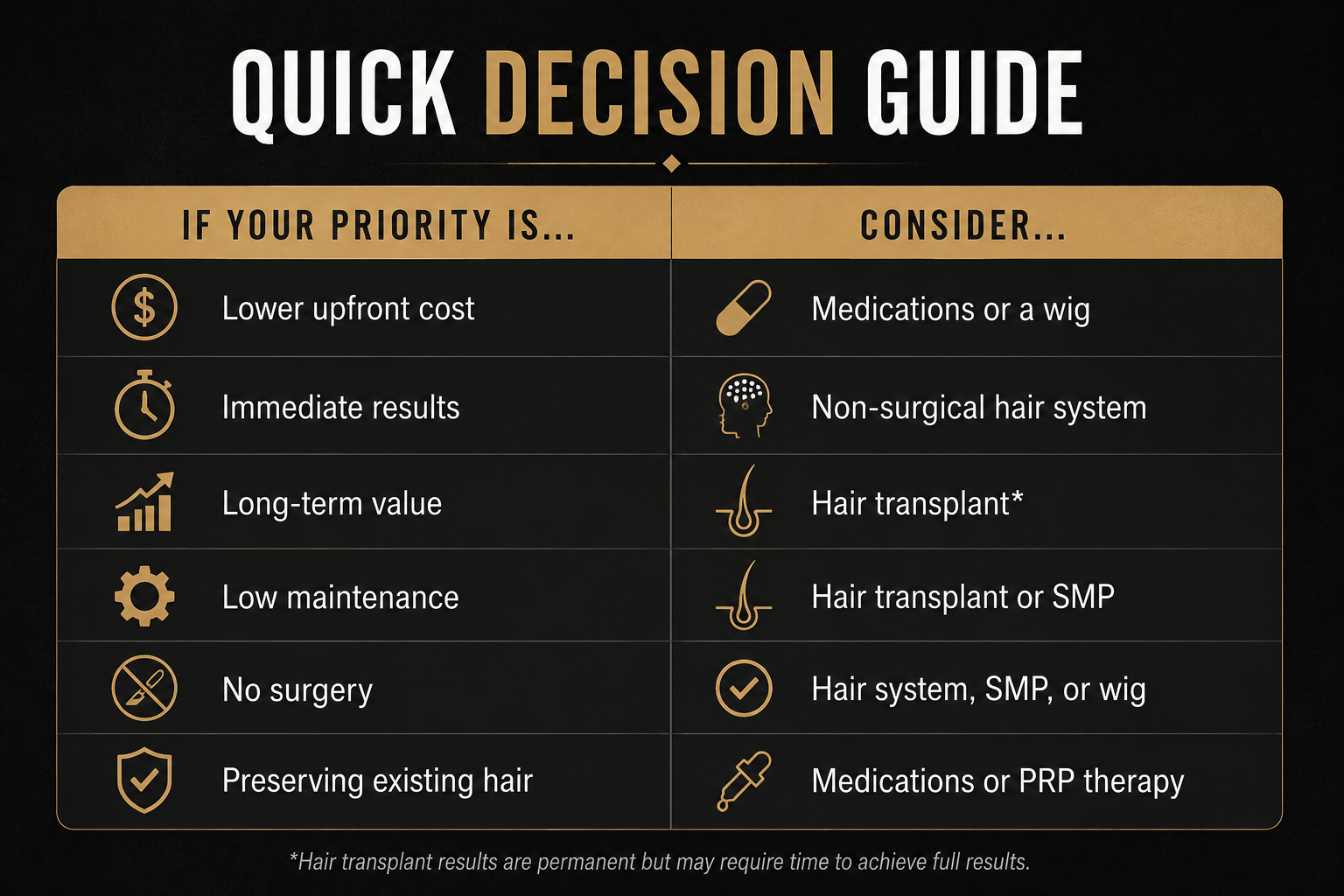
No chart can tell you which treatment is right for you.
It can help you ask better questions. A good consultation should do the rest.
You shouldn't leave wondering what just happened. You should leave knowing why one option fits you better than another.
That's the difference.
Frequently Asked Questions
How much does hair replacement cost in Bend, OR?
Non-surgical hair replacement in Bend is typically quote-based, so you'll need a consultation to get an accurate estimate. If you're considering a hair transplant, prices in Oregon commonly range from about $6,000 to $16,000, depending on the technique and the number of grafts required.
The best way to compare your options is to start with a consultation instead of guessing based on online averages.
Do you offer hair replacement consultations in Bend?
Yes. If you're in Bend or the surrounding Central Oregon area, we'll evaluate your hair loss, talk through your goals, and recommend the option that fits you best.
Because every treatment is different, consultations are the best way to receive an accurate quote instead of relying on broad online price ranges.
How do I know if I need a hair transplant or a hair system?
It comes down to your goals. If you want immediate results without surgery, a custom hair system is often the better fit. If you're looking for a long-term surgical solution and you're a good candidate, a hair transplant may make more sense.
We'll explain the pros and cons of each so you can decide with confidence.
Is PRP hair restoration another option?
For some people, yes. PRP (Platelet-Rich Plasma) therapy is designed to support existing hair growth rather than replace lost hair. It's often used for early-stage thinning or alongside other treatments.
Some providers in Bend offer PRP hair restoration packages starting around $1,800, although pricing varies depending on the provider and treatment plan.
Still Weighing Your Options?
The best hair replacement option isn't the most expensive one or the one getting the most attention online.
It's the one that fits your hair, your routine, and your expectations.
If you're not sure where to start, book a consultation. We'll walk you through your options and help you make a decision you feel good about.