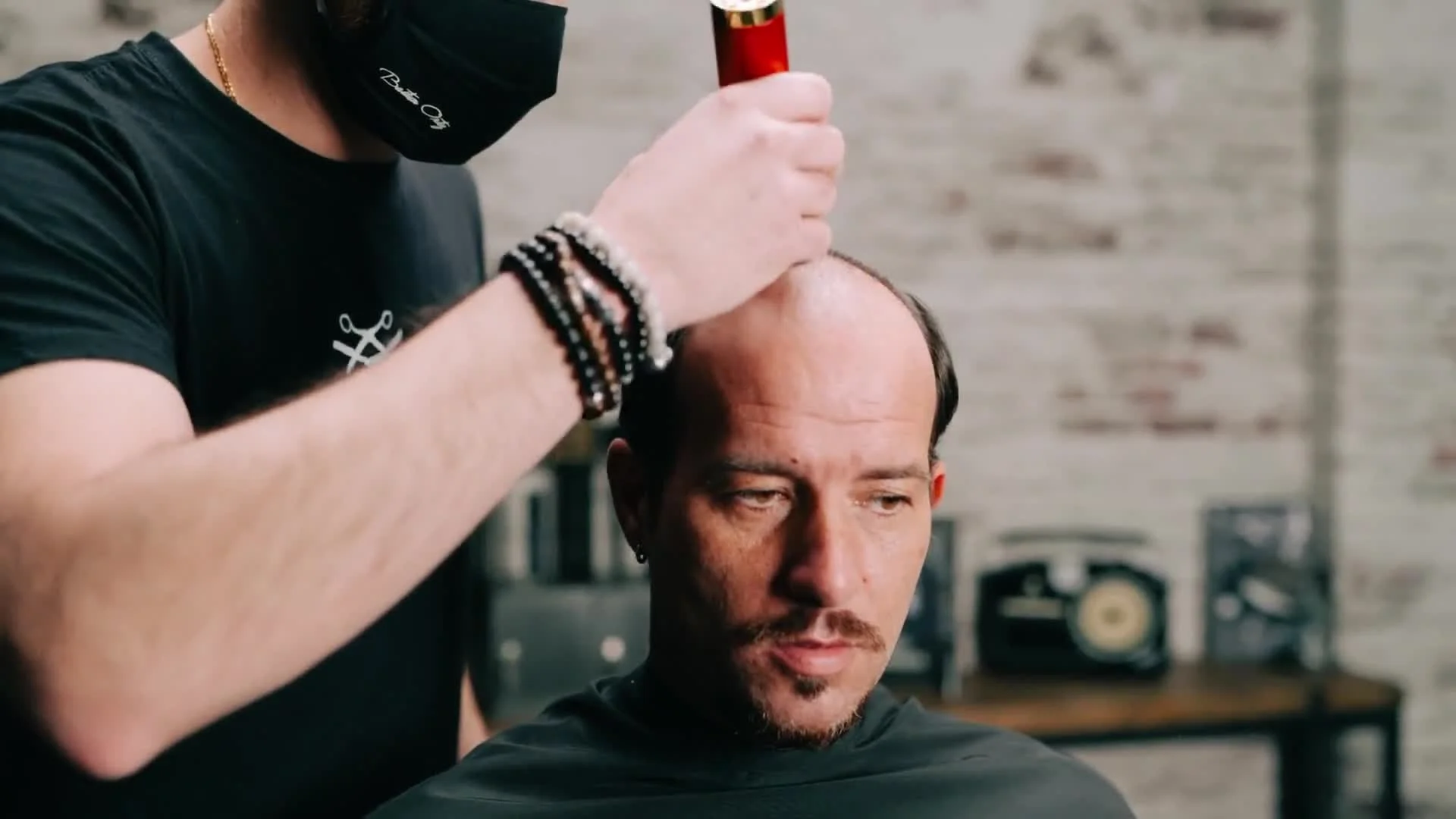
Let's be honest. The word toupee still makes some guys picture a shiny hairpiece with a suspiciously perfect hairline. You know the one. It looks like it might move if the wind picks up.
That’s all changed. Hair replacement has come a long way. Today's systems use different materials, hair types, and attachment methods to create a natural-looking result.
So, is a modern hair system really different from a toupee? Not necessarily. The terms often describe the same type of non-surgical hair replacement. What matters is how the system is made, fitted, and maintained.
Let's get into the details worth paying attention to.
Is a Toupee the Same as a Modern Hair System?
For the most part, yes.
Traditionally, a toupee refers to a partial hairpiece that covers an area of thinning or baldness. Hair system is a newer, broader term commonly used in the hair replacement industry. The two are often used interchangeably.
Here's the thing: changing the name doesn't automatically make the product better. The real differences come down to construction, materials, coverage, fit, and quality.
Some systems cover a small thinning area, while others provide coverage across a larger section of the scalp. A wig generally offers full scalp coverage.
Don't get stuck debating the label. Focus on the result you want and how much maintenance you're prepared to handle.
Learn more about hair replacement for men in Bend.
What Types of Toupees and Hair Systems Are Available?
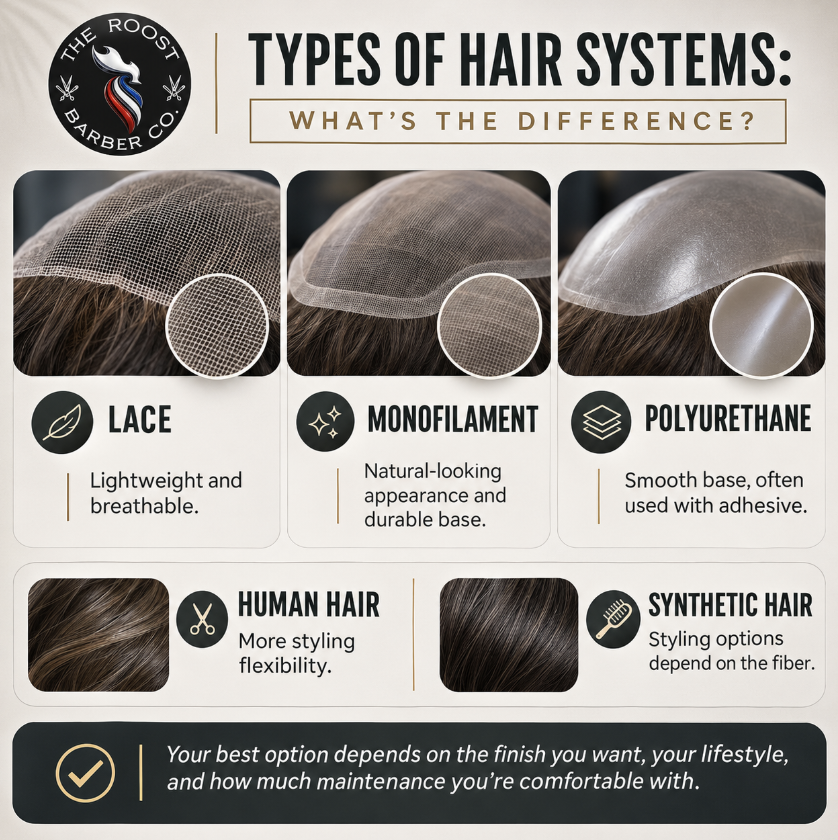
Not all hair systems are built the same. The base material, hair type, and coverage all affect how a system looks and feels.
Base Materials
The base sits against your scalp and affects breathability, appearance, and attachment.
Lace: Lightweight and breathable, making it a popular option for airflow.
Monofilament: Fine mesh material designed to provide a natural-looking appearance and a durable base.
Polyurethane: A smooth material often used with adhesive attachment. Thickness and feel vary by product.
Each has tradeoffs. The right choice depends on your scalp, lifestyle, and maintenance preferences.
Human Hair vs. Synthetic Hair
Human hair can generally be cut and styled like natural hair. It offers flexibility if you want to change your look or match your existing hairstyle.
Synthetic hair can be a practical alternative, but styling options depend on the fiber. Some products cannot handle heat, so check the care instructions before using styling tools.
Neither is automatically the better choice. Think about the finish you want and how much styling freedom you need.
Partial vs. Full Coverage
Some systems cover a specific area, such as the crown or front hairline. Others cover a larger portion of the scalp.
More coverage isn't automatically better. Choose a system that addresses your hair loss without adding more than you need.
What Makes a Modern Hair System Look Natural?
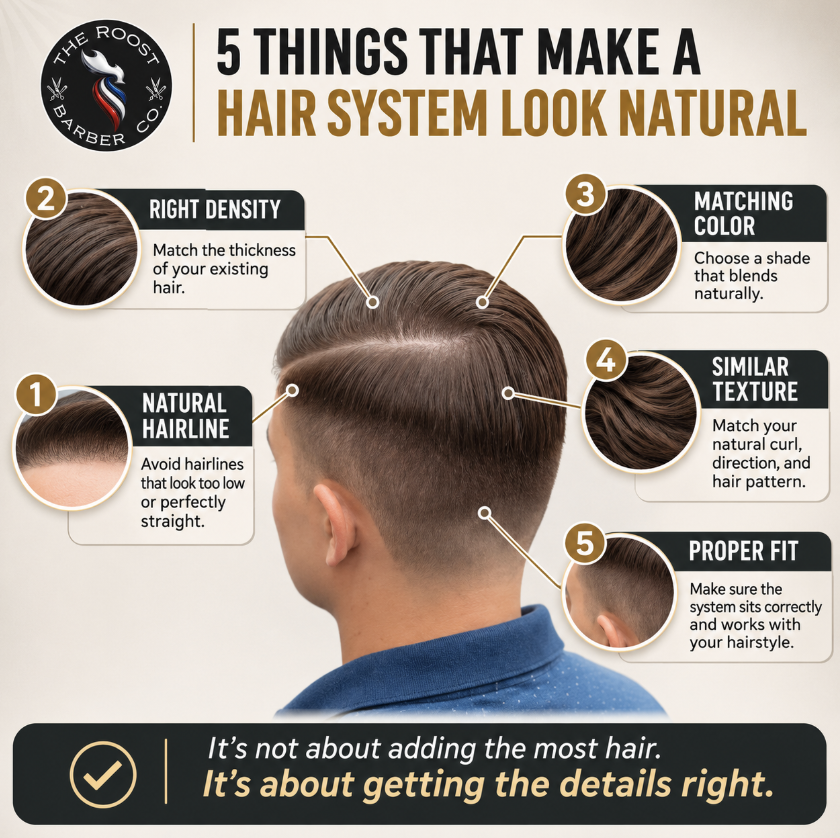
A natural-looking result comes down to several details working together: hairline, density, color, texture, and fit.
The hairline: Too low or too perfectly straight can look unnatural. Your hairline should suit your face, not look like someone drew it with a ruler.
The density: This is where guys sometimes get carried away. More hair sounds appealing when you're replacing what's been lost, but a thick system sitting above noticeably thinner natural hair can look disconnected. You're aiming for a believable result, not a full head of hair that belongs to a different person.
The color and texture: Matching the shade isn't enough. Your natural hair's texture, curl, and direction also affect how well the system blends. Check the match in natural light, not just under bathroom lighting.
The fit and styling: The system should sit properly and work with the way you actually wear your hair. A style that suits your existing hair is a smarter move than forcing a look that doesn't.
The same principle applies when choosing haircuts for men with thinning hair.
How Does a Toupee or Hair System Stay On?
The attachment method depends on the system, your scalp, and how you plan to wear it.
Common options include:
Clips: Attach to existing hair and allow for easier removal.
Tape: Double-sided tape secures the base to the scalp or surrounding area.
Liquid adhesive: Creates a bond between the system and scalp.
Each has advantages and drawbacks. Your activity level, sweat, scalp sensitivity, and maintenance routine should all factor into the decision.
Don't just ask which method holds strongest. Ask which one works with your everyday life.
Also, pay attention to your scalp. Adhesives and friction can cause irritation. Persistent redness, burning, sores, or pain shouldn't be ignored. Don't cover an irritated area with more adhesive and hope for the best.
What Is Wearing a Hair System Actually Like?
A hair system can become part of your regular grooming routine, but it isn't a fit-it-and-forget-it situation.
You'll need to brush, clean, condition, and style it according to the manufacturer's instructions. You'll also need periodic maintenance, including cleaning and reattachment depending on the system.
Can you shower with it? Generally, yes, depending on the construction and attachment method. Follow the care instructions, especially after a new installation when adhesive may need time to cure.
What about exercise? Sweat, friction, and frequent handling can affect how the system wears. If you train regularly or spend plenty of time outdoors, you may need more frequent maintenance.
Here's the question worth asking: are you comfortable with the upkeep? If your current grooming routine takes about 30 seconds, a demanding system might be an adjustment. Looking sharp is great. Taking on a second job to maintain your hair? Less appealing.
How Long Does a Toupee or Hair System Last?
There's no universal lifespan. Durability depends on the base material, hair quality, attachment method, frequency of use, and how well you maintain it.
Regular washing, styling, sweat, and friction all contribute to wear. Some systems require more frequent cleaning, reattachment, or replacement than others.
Ask your provider about the expected lifespan and maintenance schedule before buying. Treat advertised lifespans as estimates, not guarantees.
A system that lasts longer on paper isn't much of a win if maintaining it becomes a chore.
What Does a Toupee or Hair System Cost?
The initial purchase is only part of the expense. You'll also need to consider attachment supplies, cleaning, styling, professional maintenance, and eventual replacement.
General industry estimates put stock hairpieces around 300–700, while custom systems may start around $800. These are estimates, not guaranteed prices. Actual costs depend on the product and provider.
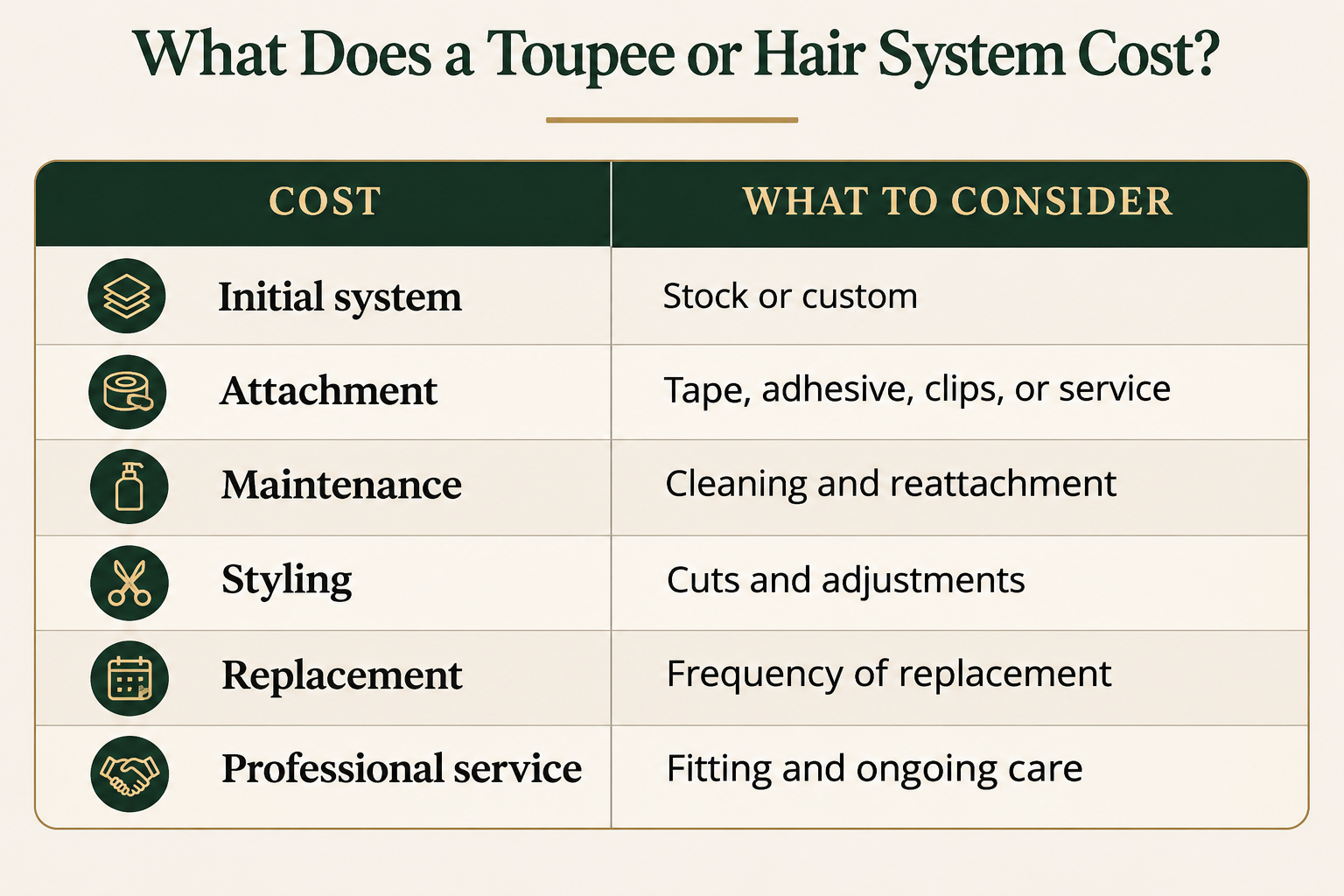
Don't choose based on the cheapest price alone. A lower upfront cost may come with more frequent replacements or additional maintenance expenses.
For local pricing, see our guide to hair replacement costs in Bend.
Hair System vs. Hair Transplant: Which Makes More Sense?
Both address the appearance of hair loss, but they work differently.
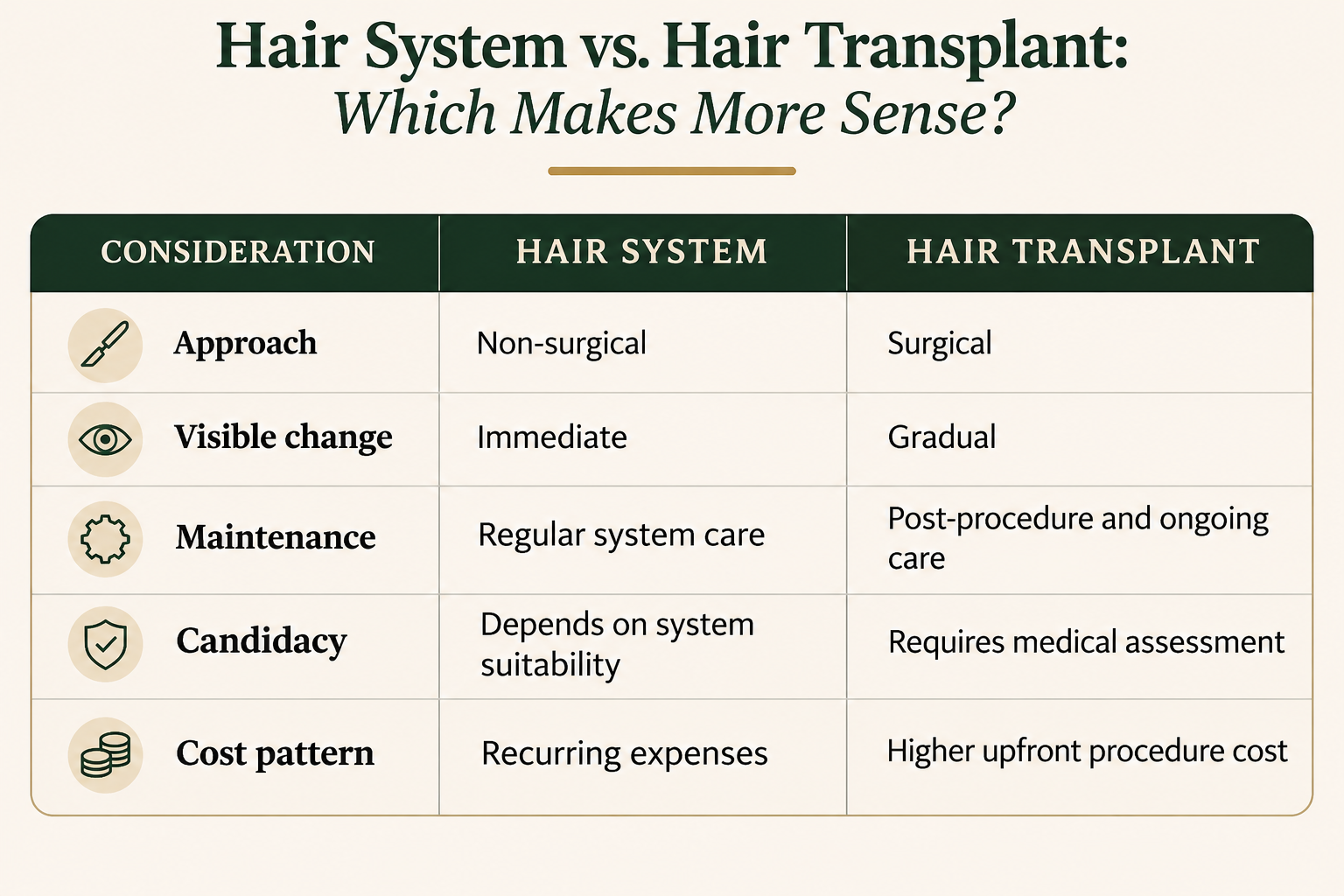
A hair system may suit someone who wants immediate coverage without surgery and is comfortable with regular maintenance.
A transplant may be worth exploring if you're interested in surgical hair restoration and are a suitable candidate.
Neither is automatically better. Consider your expectations, budget, health, and willingness to maintain the result. Speak with a qualified medical professional about treatment options and transplant suitability.
6 Common Mistakes That Make a Hair System Look Unnatural
Small details can make or break the result. Watch out for these common mistakes:
Too much density: A system that's much thicker than your surrounding hair can look disconnected. More hair isn't always better.
The wrong hairline: A hairline that's too low or perfectly straight can draw unwanted attention.
Poor color or texture matching: The shade, curl, and direction should blend with your natural hair.
A poor fit: An improperly fitted system can look off and feel uncomfortable.
Overstyling: Too much product or an overly elaborate style can make the hair look stiff.
Skipping maintenance: Poor cleaning and attachment care can affect both the system and your scalp.
The goal isn't to make your hair look like it did decades ago. It's to find a result that looks right now.
What Should You Ask Before Choosing a Hair System?
Before committing, get clear answers to these questions:
What area of my scalp needs coverage?
Which base material suits my needs?
Should I choose human or synthetic hair?
What density will blend with my existing hair?
Which attachment method fits my routine?
How often will maintenance be needed?
What are the ongoing costs?
You don't need to walk into a consultation knowing everything. That's what the consultation is for.
Read what to expect at a hair replacement consultation before your visit.
Frequently Asked Questions
Is a toupee the same as a hair system?
Often, yes. Both terms can describe non-surgical hair replacement. Toupee traditionally refers to partial coverage, while hair system is a broader industry term.
Are modern hair systems just toupees?
In many cases, yes. Modern systems may use updated materials, construction, and attachment methods, but the terminology often overlaps.
Are toupees noticeable?
They can be if the hairline, density, color, texture, or fit is wrong. A properly selected and fitted system can blend with existing hair, but no result should be guaranteed to be completely undetectable.
Are toupees comfortable?
They can be when properly fitted. Comfort depends on the base material, attachment method, scalp sensitivity, and maintenance.
Can you shower with a toupee?
Generally, yes. It depends on the system and attachment method. Always follow the manufacturer's care instructions.
Can you sleep with a toupee?
Yes, although pillow friction can contribute to wear. Gentle care and a satin or silk pillowcase may help reduce friction.
Is a toupee a treatment for baldness?
No. A toupee or hair system provides cosmetic hair replacement. It doesn't treat the underlying cause of hair loss.
Still Deciding?
You don't need to get hung up on whether it's called a toupee or a hair system. What matters is finding an option that suits your hair loss, looks natural, fits properly, and works with your routine.
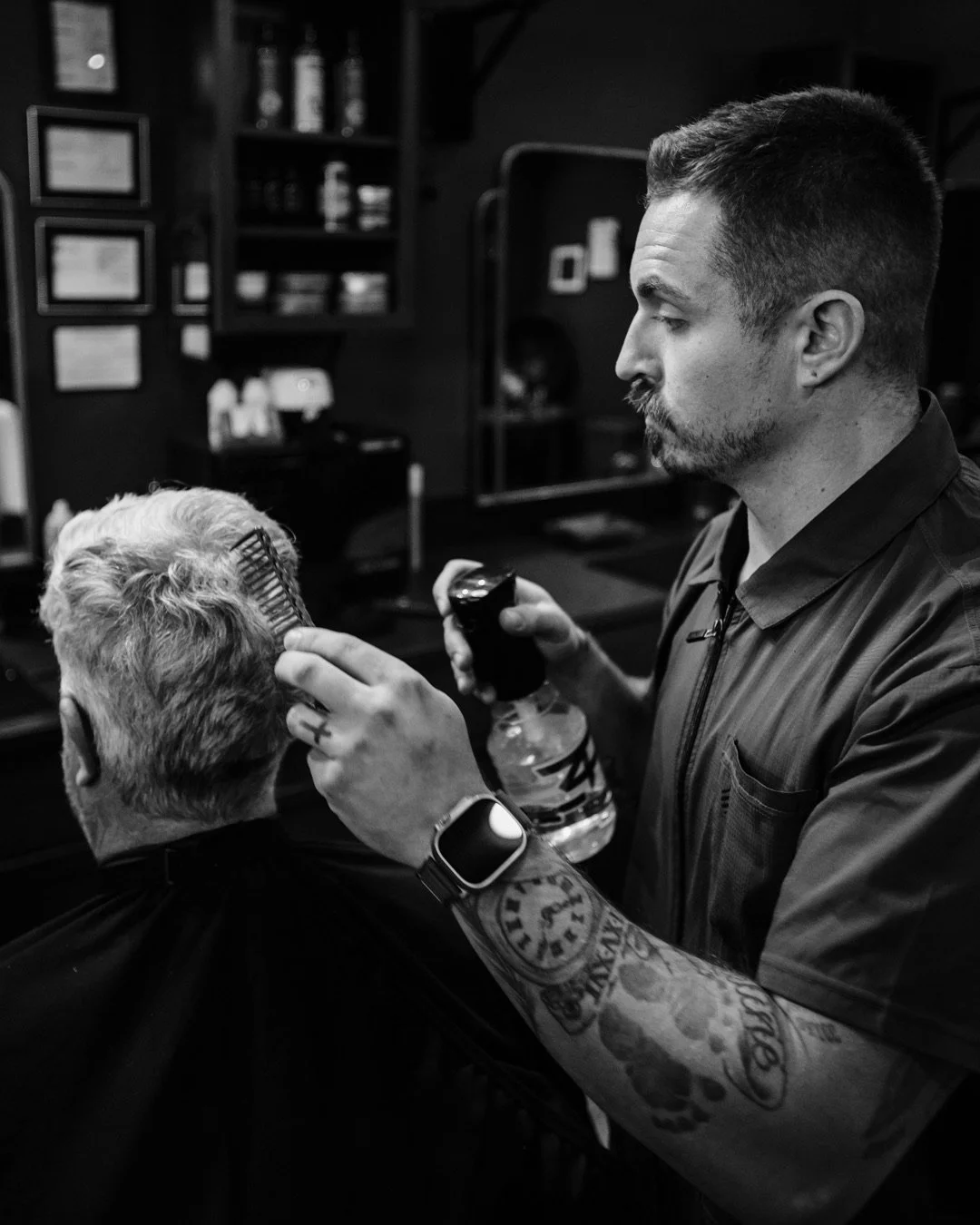
Exploring hair replacement in Bend? The Roost can help you understand your options and figure out what makes sense for your goals. Bring your questions. We'll help you sort through the details without the sales pitch.